


Pyramids



Pyramids




Crystal & Orgonite Pyramids
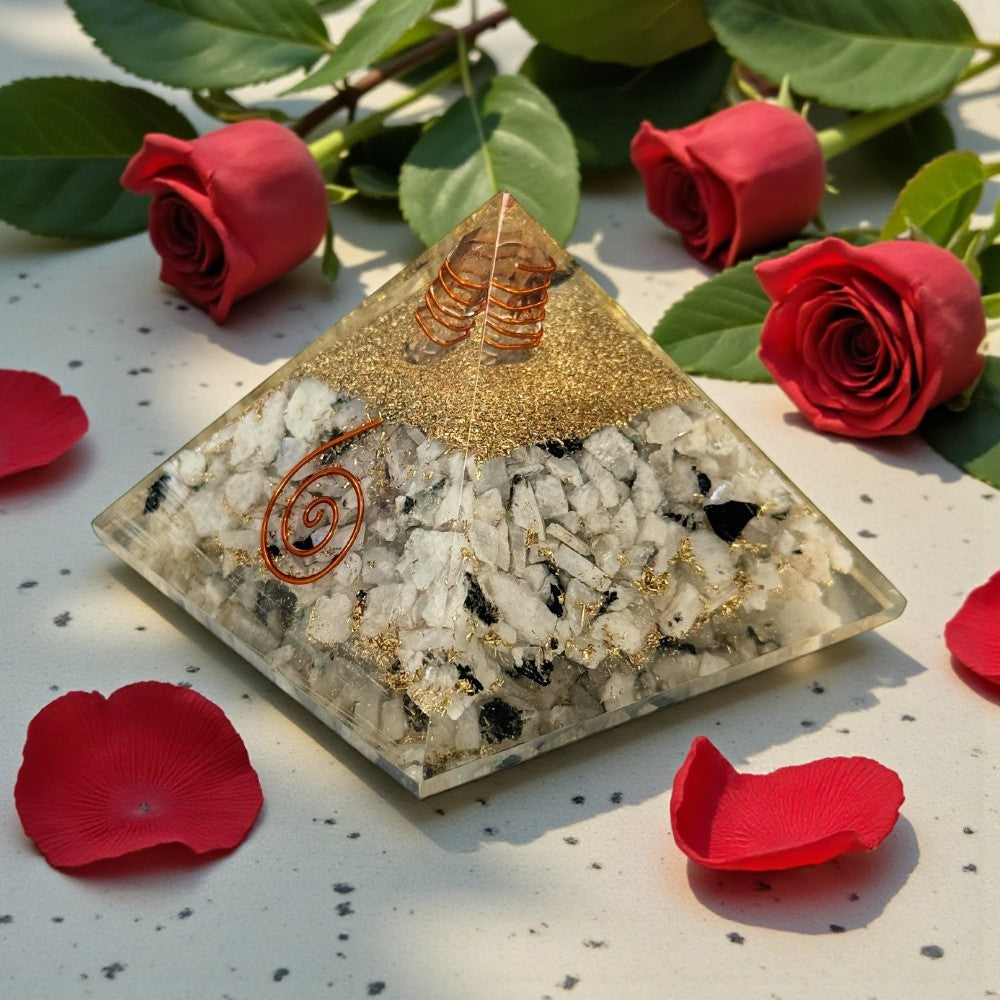
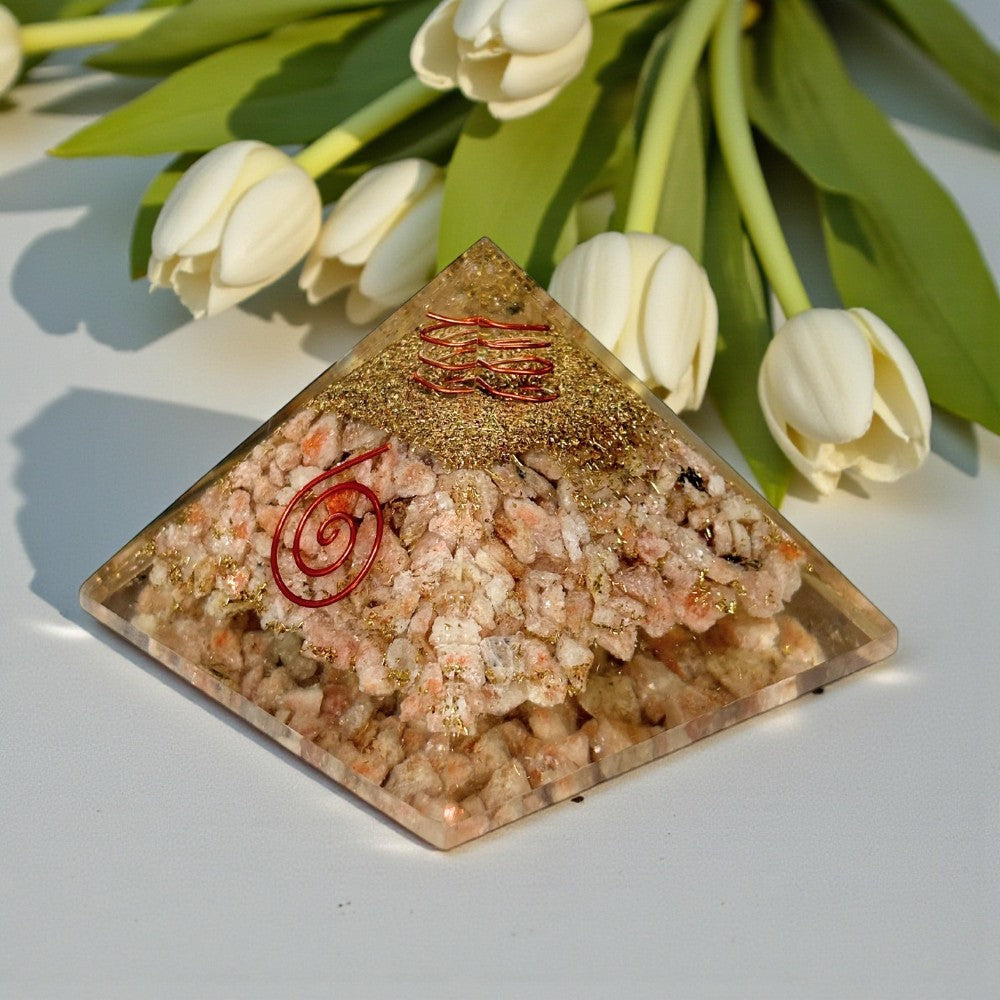
Crystal and orgonite pyramids bring geometric form, material, and symbolism into meditation spaces, shelves, desks, altars, and other intentional settings. Our collection includes natural Shungite pyramids, Opalite pieces made from manufactured glass, and orgonite designs that combine resin, metal shavings, quartz crystal, gemstone materials, and a visible copper coil.
Each material offers a different character. Natural Shungite keeps the stone itself at the center of the design, while Opalite has a translucent, opalescent glass appearance. Orgonite pyramids bring several materials together in layered composite forms associated with modern metaphysical and energy-work traditions.
The pyramid shape also carries meaning of its own. Within sacred geometry and contemporary spiritual practices, pyramids are commonly associated with stability, grounding, focused intention, energetic movement, and the connection between earthly and spiritual experience.
Whether placed on a meditation table, desk, shelf, altar, or bedside table, a pyramid can become part of a space you return to for reflection, intention, or simply appreciation of its materials and form.
Orgonite Crystal Pyramids
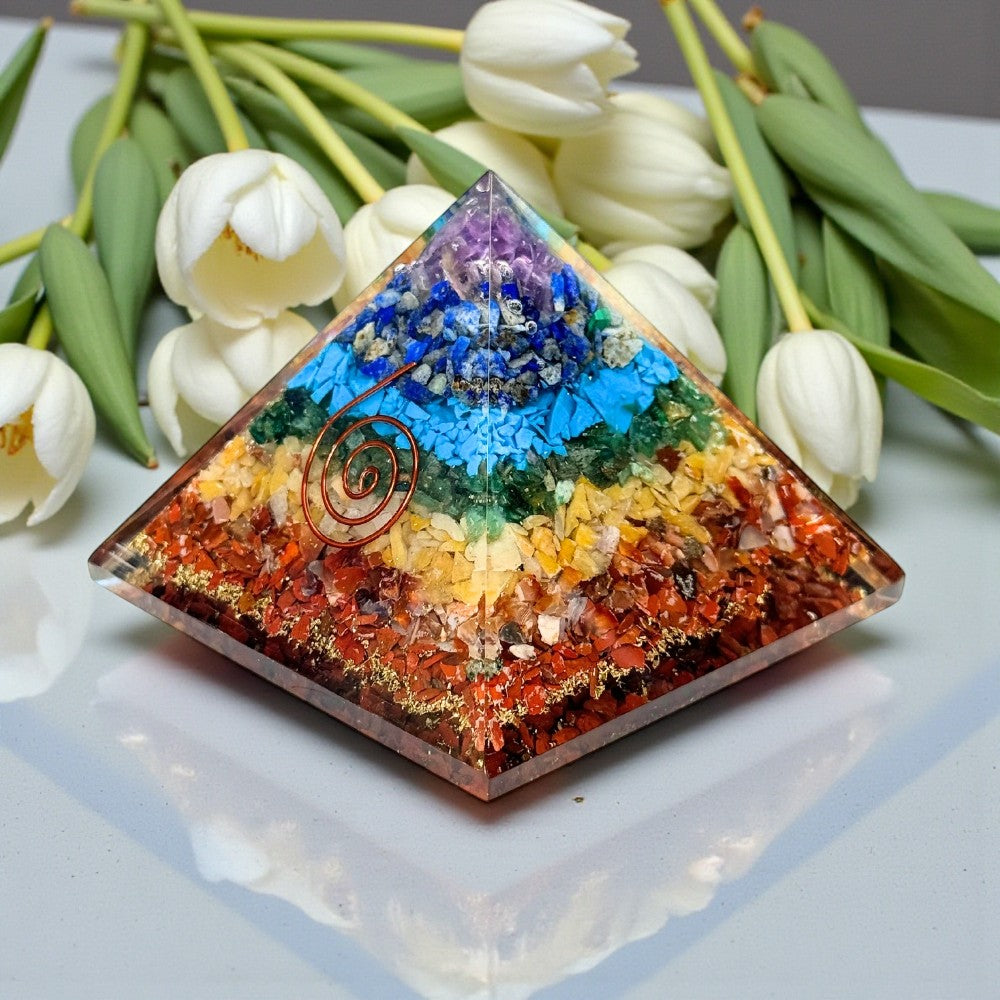
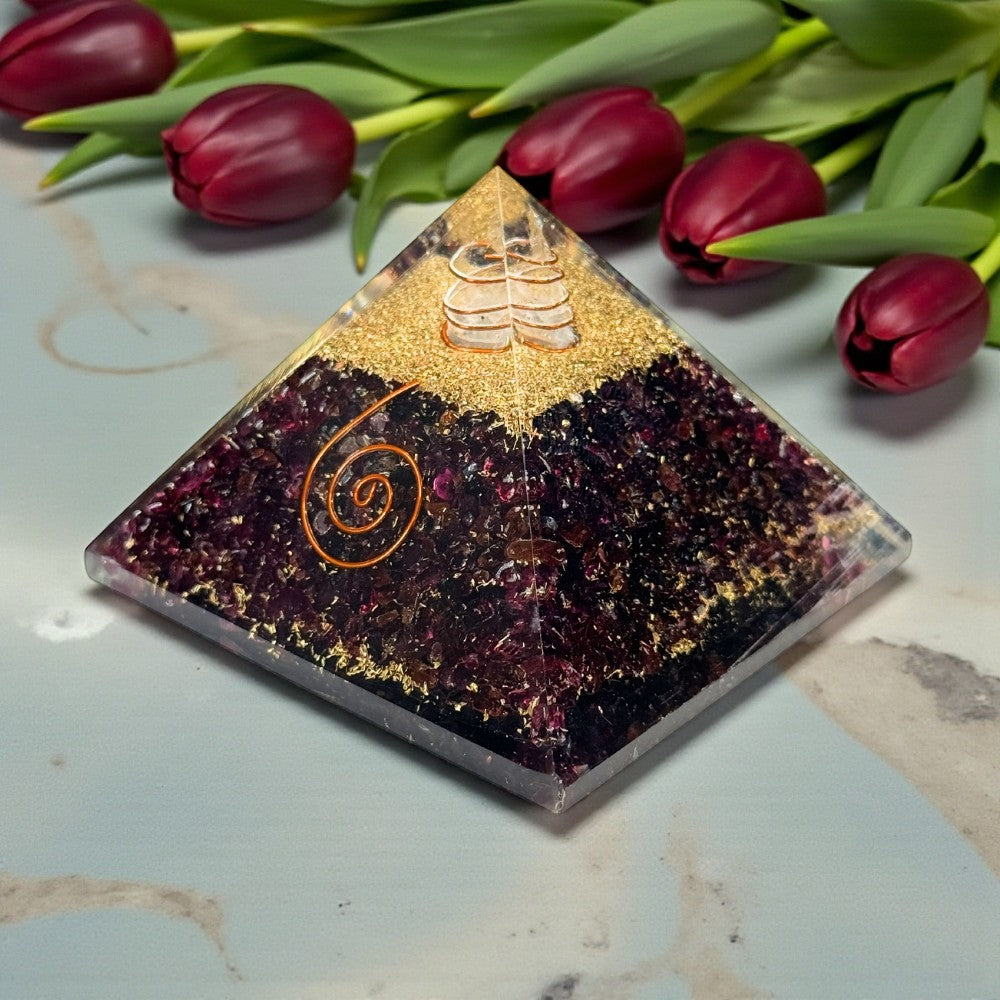
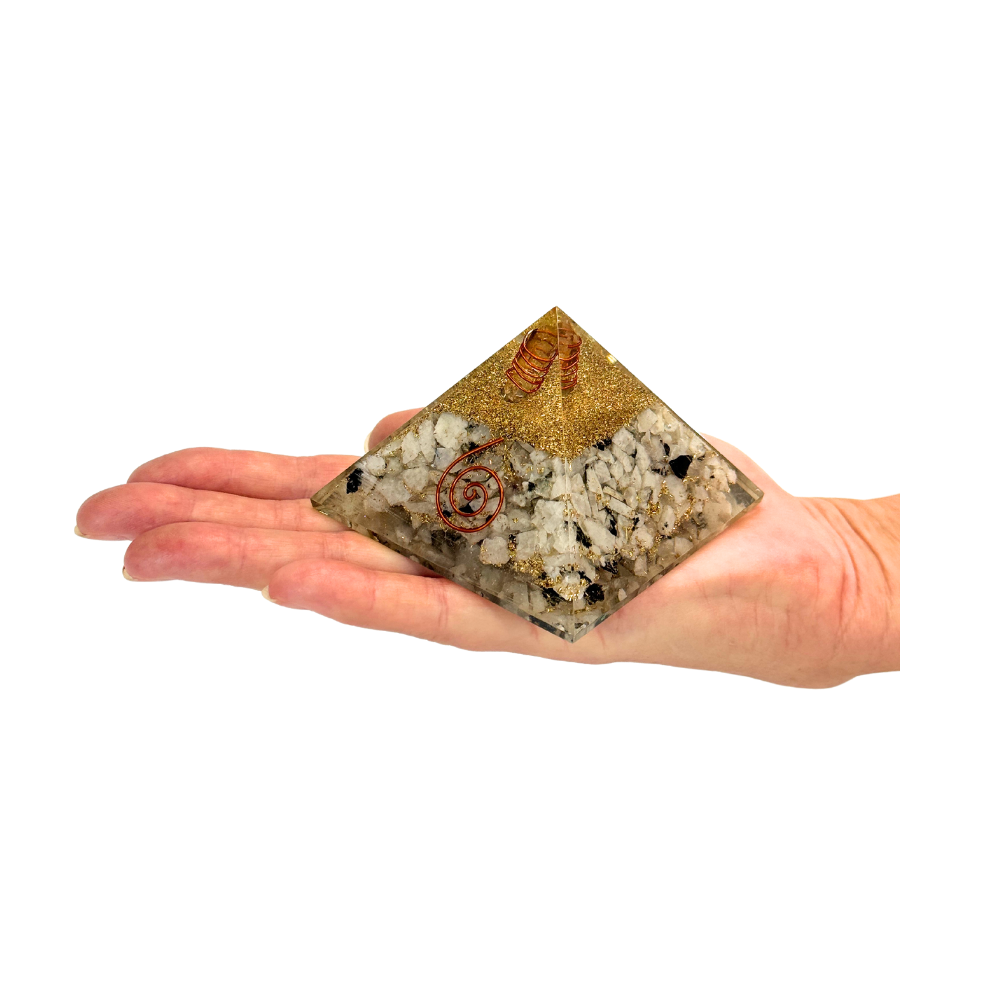
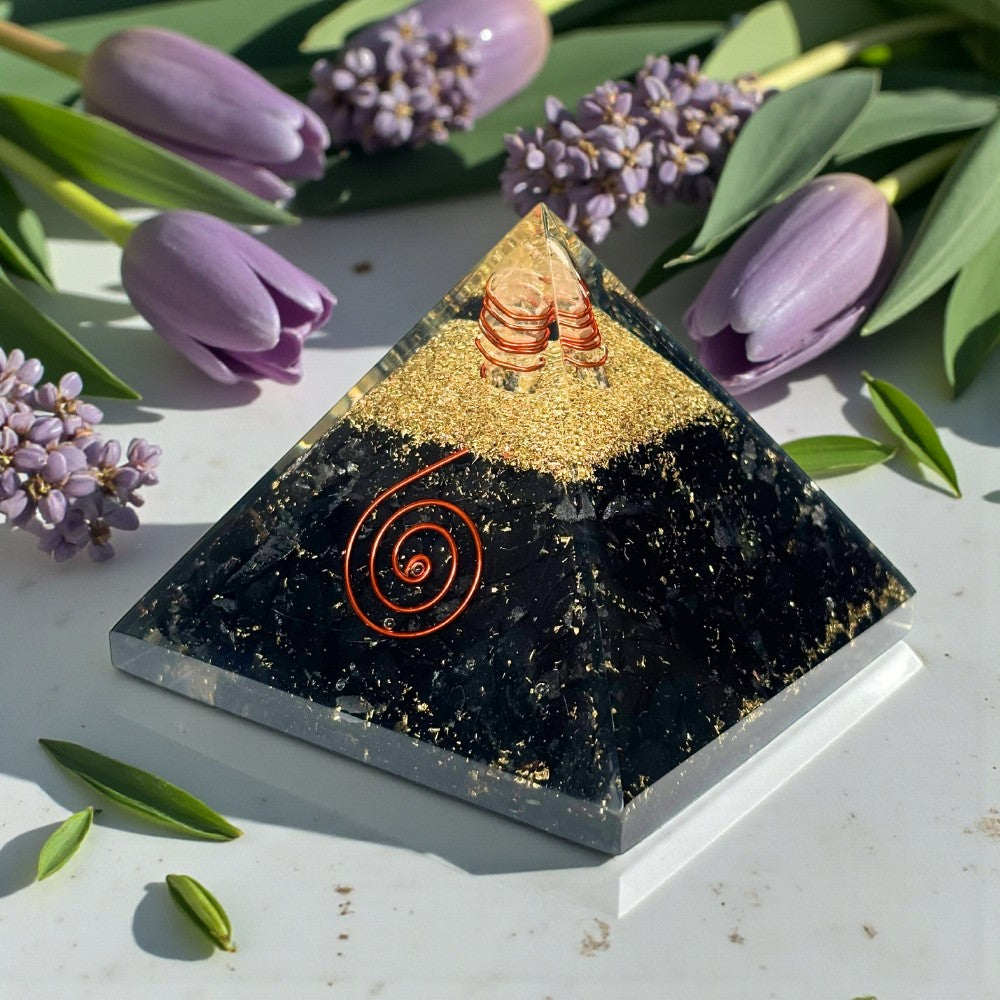
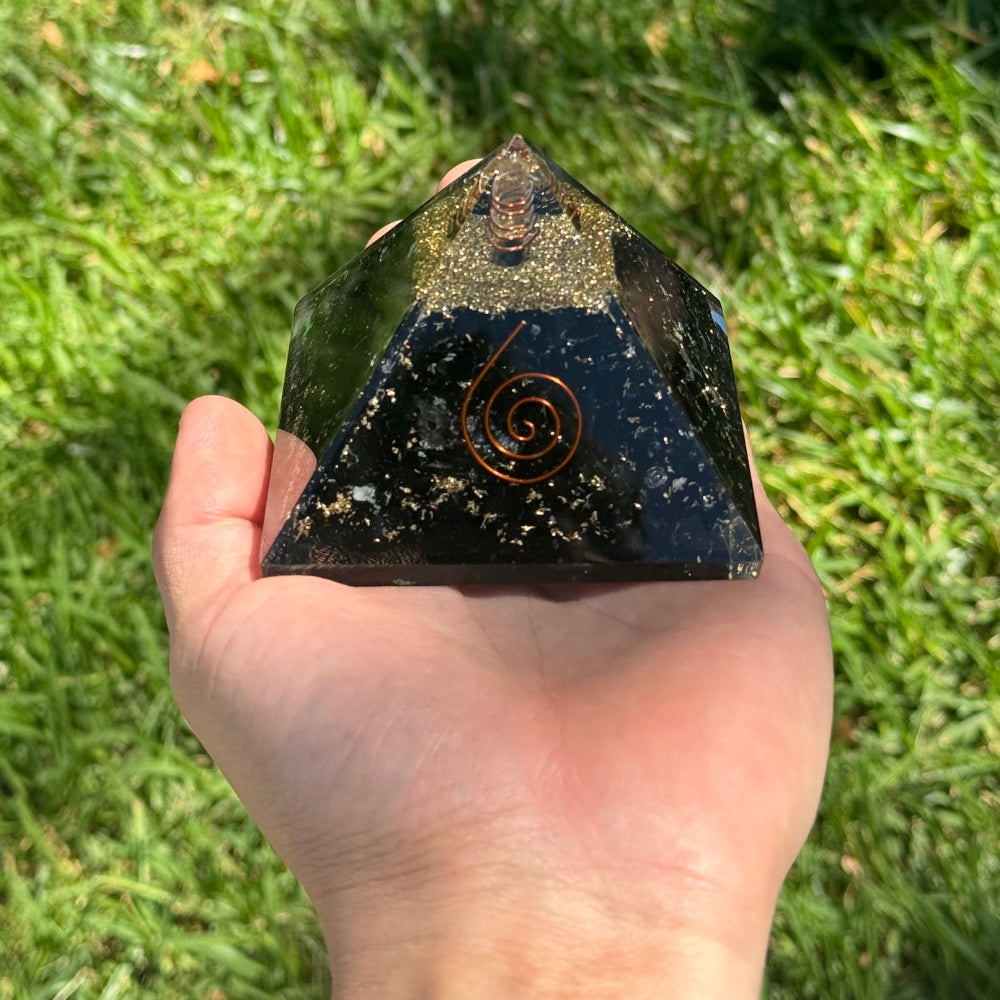
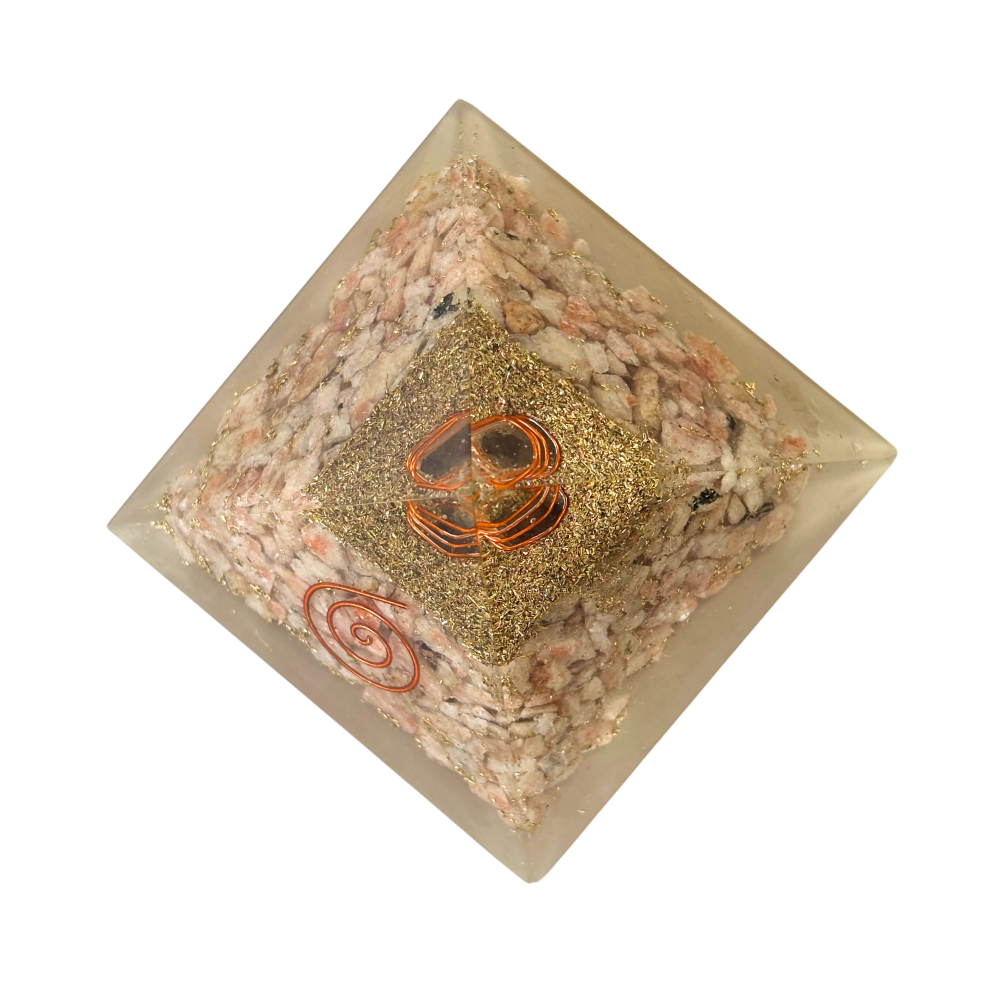
Orgonite pyramids are composite pieces made by combining several materials rather than shaping a single stone. Earths Elements orgonite pyramids include resin, metal shavings, quartz crystal, gemstone or mineral materials, and a visible copper coil as part of their layered construction.
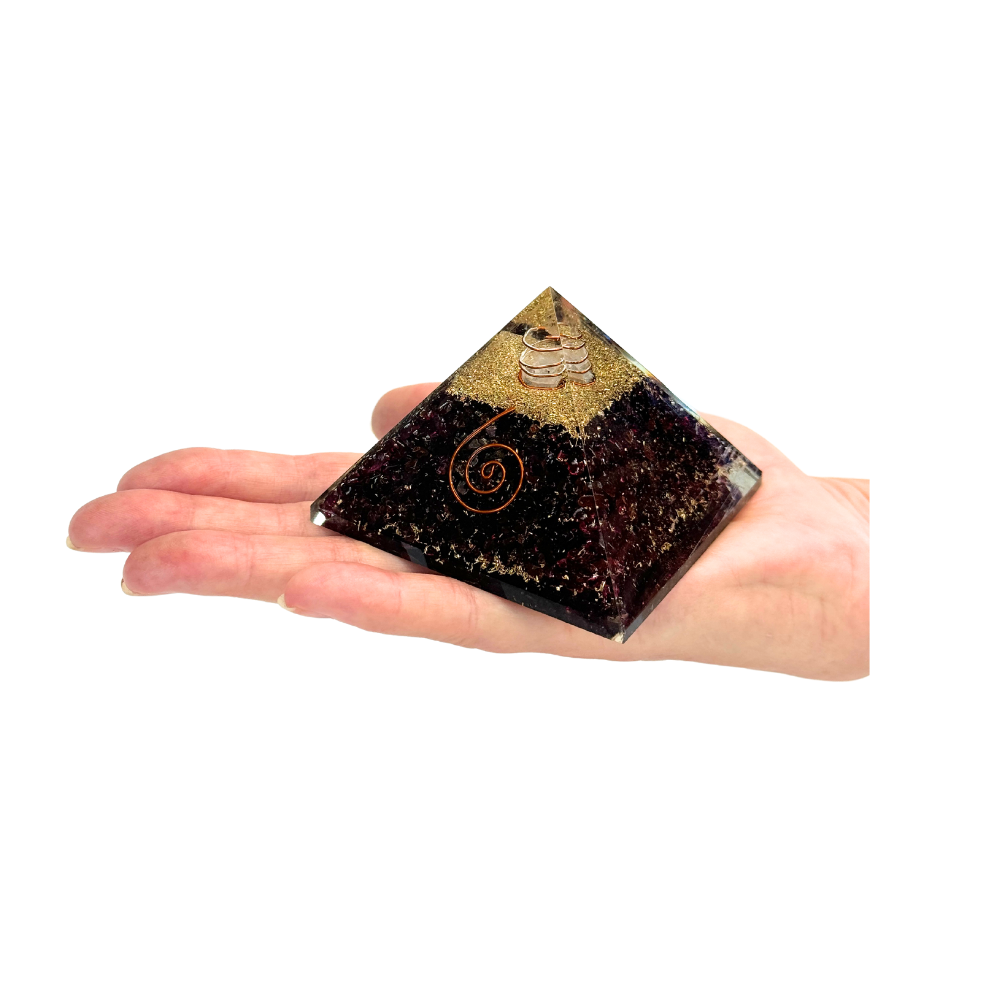
Our collection includes designs featuring Black Tourmaline, Bloodstone, Garnet, Lapis Lazuli, Moonstone, Shungite, Sunstone, and a seven-chakra arrangement. Each material contributes its own color, texture, symbolism, and visual character.
The copper coil is part of both the physical construction and the metaphysical symbolism of these pieces. Copper is valued within many contemporary energy practices as an energetic conductor, while spiral and coil forms are commonly associated with directing, circulating, or amplifying energy.
Quartz also plays an important role in modern explanations of orgonite. Quartz has a scientifically recognized property called the piezoelectric effect, meaning mechanical pressure on quartz can create electrical polarization. Some orgonite theories connect this physical property with the pressure created around embedded quartz as resin cures.
The piezoelectric effect itself is established science. Broader ideas that orgonite uses this mechanism to cleanse or transform subtle energy, generate beneficial negative ions, or influence electromagnetic fields belong to modern metaphysical theory rather than scientifically established effects.
For the full range of designs and available pieces, explore our Sacred Geometry Collection.
7 Chakras Orgonite Pyramid
In traditional chakra systems, the seven main chakras are described as energy centers associated with different colors, qualities, and areas of personal and spiritual experience.
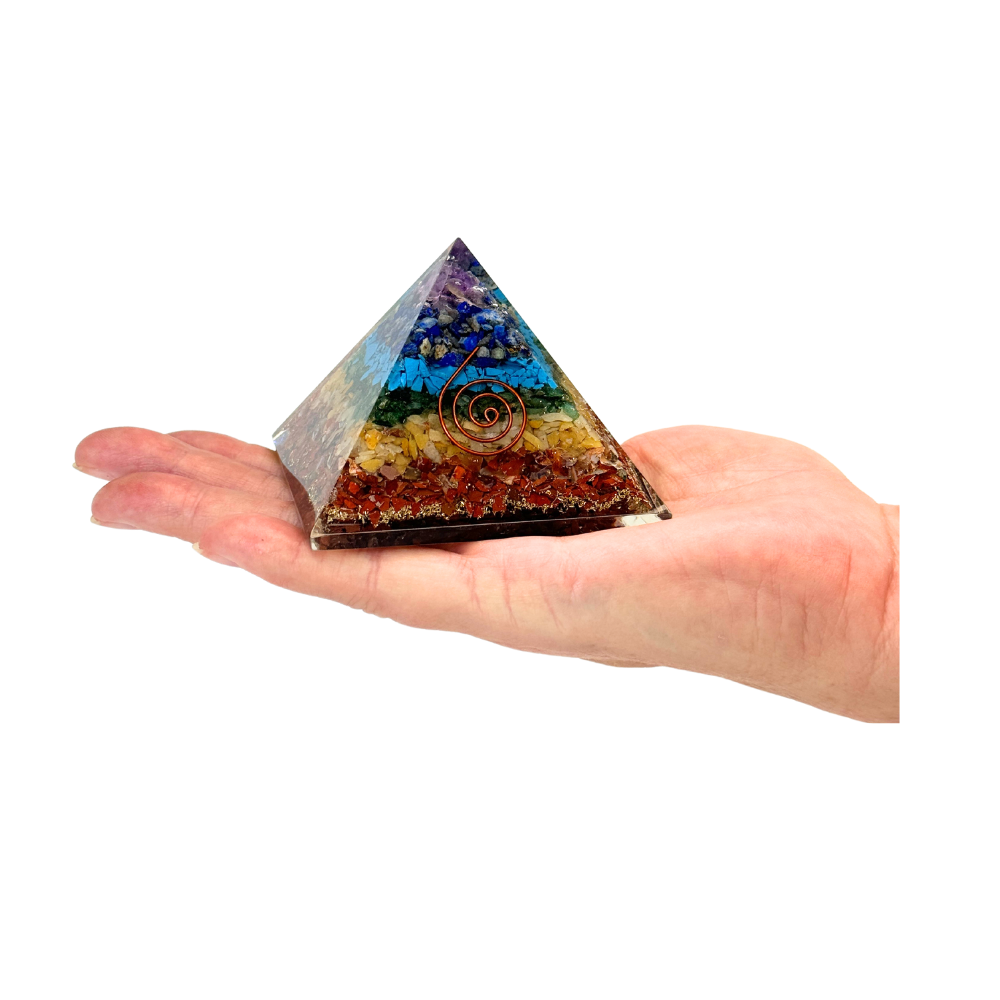
The 7 Chakras Orgonite Pyramid brings those seven associations together through color, gemstone materials, resin, metallic elements, a copper coil, and the pyramid's geometric form.
Rather than representing one chakra, the piece reflects the seven-chakra system as a whole. For someone who works with chakra traditions, that can make it meaningful as part of meditation, intention-setting, energy work, or a dedicated spiritual space.
The layered construction also connects the symbolism of the chakras with the broader metaphysical traditions surrounding orgonite and sacred geometry.
Explore our Chakras Collection for more chakra-inspired stones, jewelry, and symbolic pieces.
Solid Stone Pyramids
Shungite and Opalite pyramids offer a simpler visual form than composite orgonite designs, with one primary material defining the appearance of each piece.
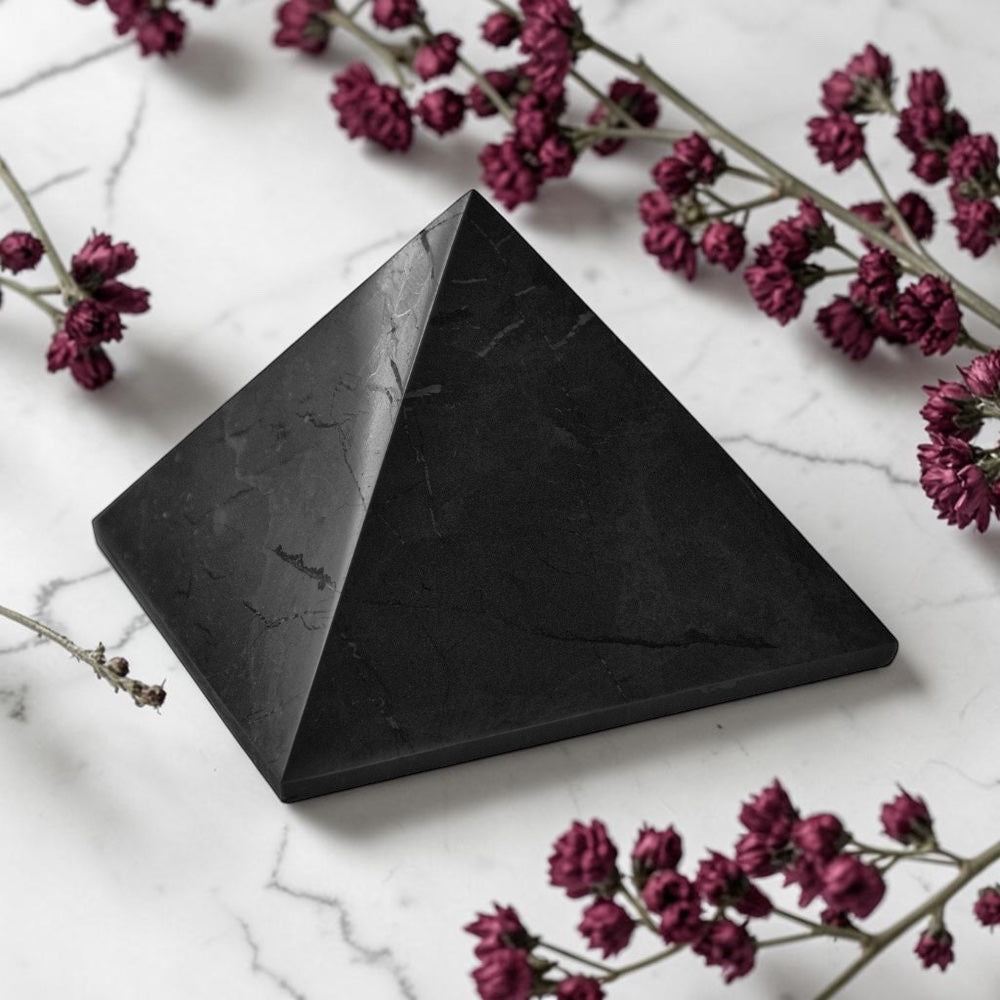
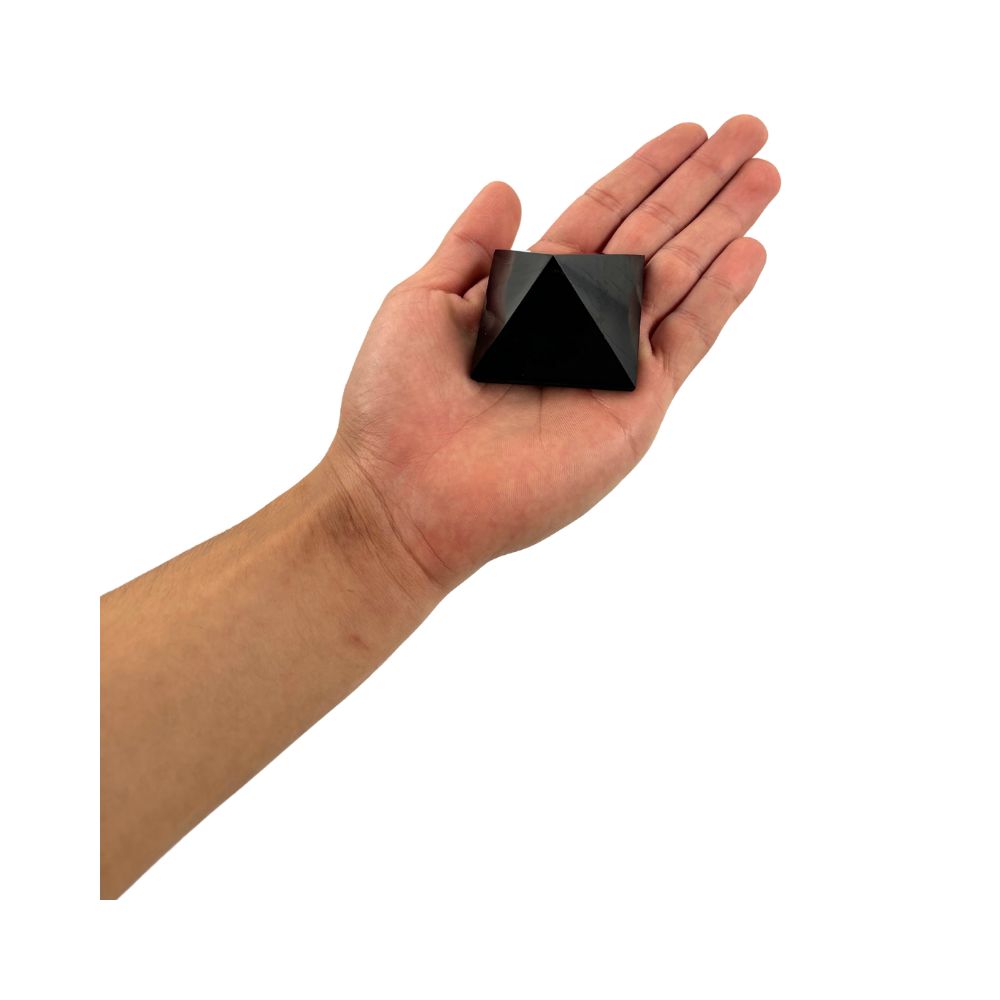
The Shungite Pyramid highlights the dark, understated character of natural Shungite. Within metaphysical traditions, Shungite is commonly associated with grounding, protection, and energetic cleansing. The single-material design keeps the appearance and symbolism of Shungite at the center of the piece.
It is different from the Shungite Orgonite Pyramid, which combines Shungite with resin, metal shavings, quartz crystal, and a copper coil as part of a layered orgonite construction.
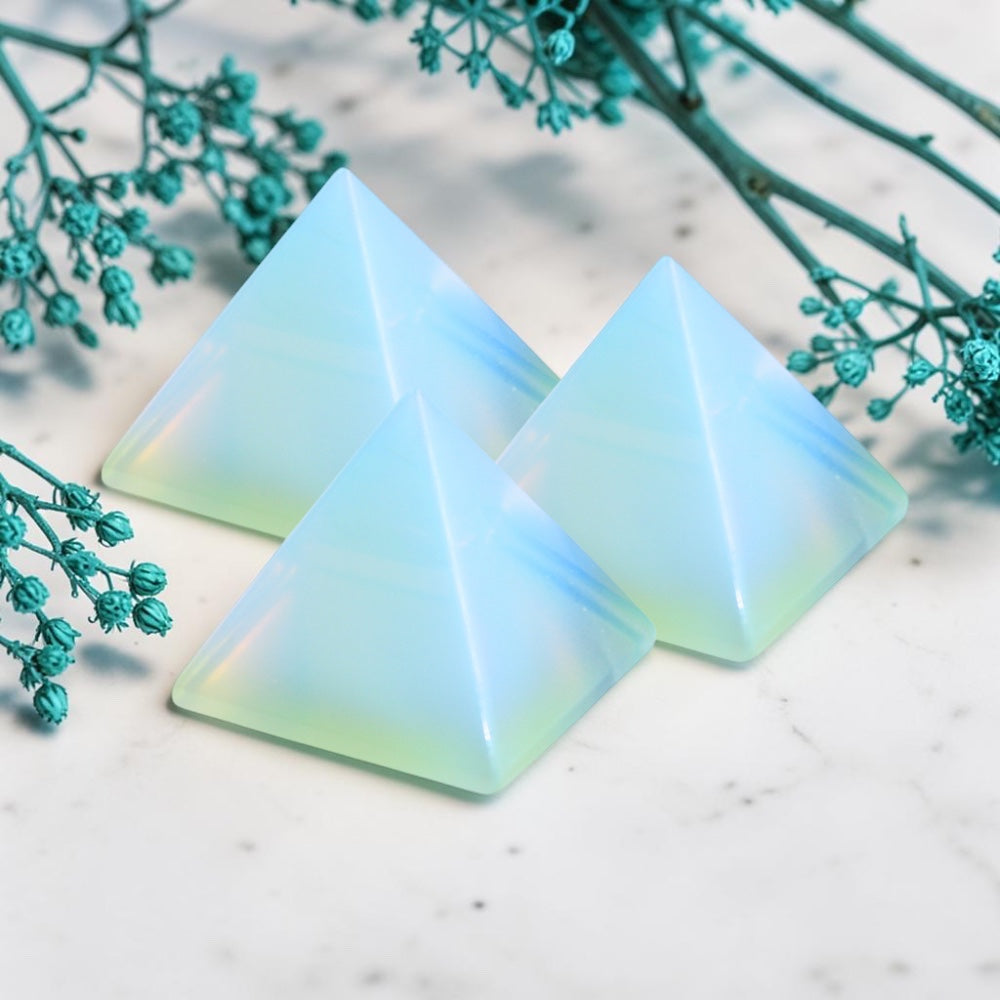
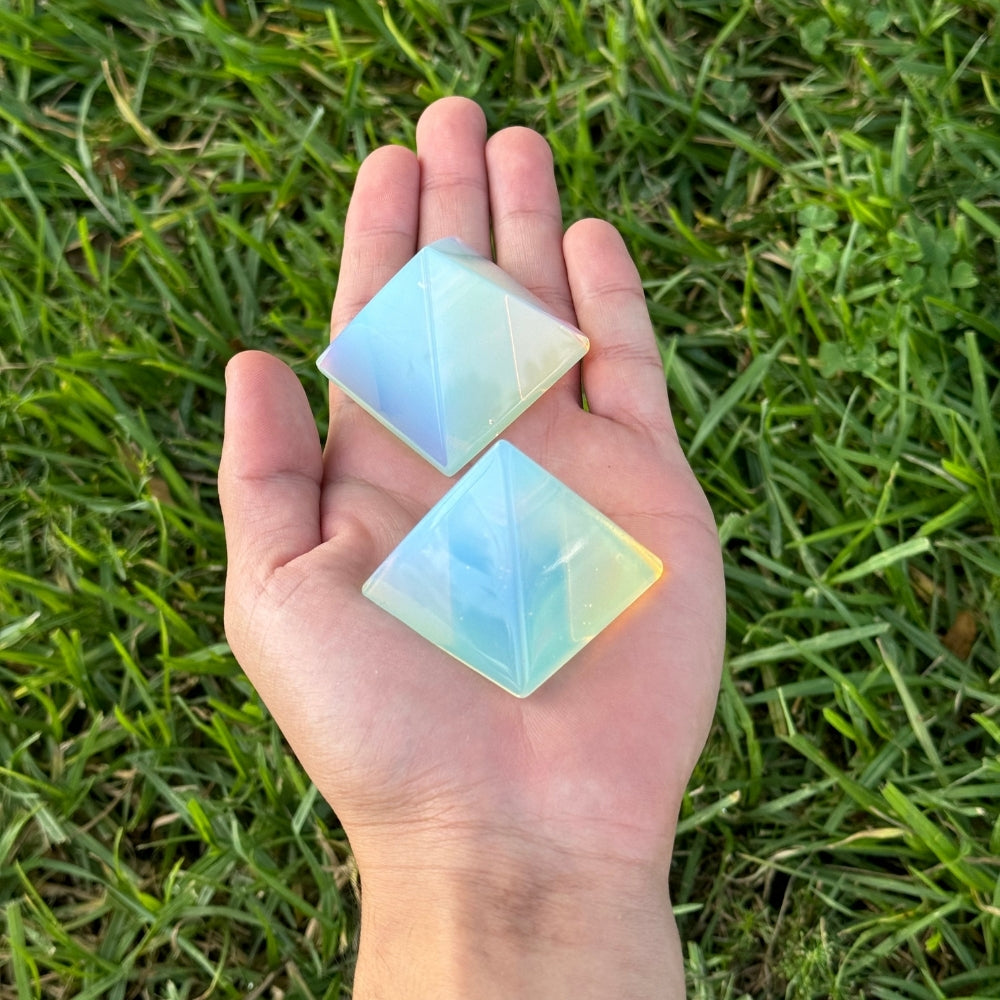
The Opalite Pyramid has a soft, translucent appearance with an opalescent quality. Opalite generally refers to a manufactured glass material rather than a naturally occurring mineral, so we prefer to describe it clearly by what it is. Within contemporary metaphysical practices, Opalite is often associated with calm, reflection, and intuitive or spiritual themes.
Both styles bring the symbolism of the pyramid shape into a simpler, single-material form and can be placed on a meditation table, desk, shelf, altar, or other intentional space.
Explore the Sacred Geometry Collection for more geometric crystal pieces.
Choosing Between Crystal & Orgonite
A practical place to start is with the material, symbolism, and the way you want the piece to feel within your space.
1. Choose a single-material pyramid if you prefer a simpler form where Shungite or Opalite defines the overall appearance.
2. Choose an orgonite pyramid if you are drawn to layered construction combining resin, metal shavings, quartz, gemstone materials, and a copper coil, along with the metaphysical traditions associated with orgonite.
3. Consider the size and weight if you plan to move the piece between rooms or use it in different practices.
4. Think about where it will sit, whether that is a meditation table, shelf, desk, altar, or bedside table.
5. Look at the color, texture, shape, and material, and choose something you genuinely enjoy having around.
The pyramid is a familiar geometric form found across architecture, art, symbolism, and spiritual traditions. Within sacred geometry and contemporary metaphysical practice, it is commonly associated with stability, grounding, focused intention, upward movement, and a symbolic connection between the earthly and spiritual.
Interpretations vary, so the meaning can remain personal rather than following one fixed definition.
Pyramids for Meditation & Intentional Spaces
A pyramid can serve as a quiet visual anchor within a meditation space or simply bring geometric form and material character to a shelf, desk, or altar.
Within sacred geometry and metaphysical traditions, the pyramid shape is often associated with stability, grounding, focused intention, energetic movement, and the meeting of earthly and spiritual experience. Some people bring these associations into meditation, energy work, journaling, or intention-setting, while others are simply drawn to the shape and materials themselves.
There is no complicated practice required. Place a pyramid somewhere you naturally spend time and allow it to become part of the space. Its significance can come from the material, traditional symbolism, geometric form, craftsmanship, or simply the attention it brings to an everyday setting.
If you prefer natural stones without a geometric cut, explore our Crystals Collection or Raw & Tumbled Collection.
FAQs
1. What is the difference between a crystal pyramid and an orgonite pyramid?
A natural stone pyramid such as Shungite is shaped primarily from one material. An orgonite pyramid is a manufactured composite combining resin, metal shavings, quartz crystal, gemstone or mineral materials, and a visible copper coil.
Opalite pyramids are another single-material style, but Opalite is generally manufactured glass rather than a naturally occurring mineral. The materials, appearance, construction, and traditional symbolism therefore differ between these pyramid styles.
2. What is orgonite made of?
Our orgonite pyramids combine resin, metal shavings, quartz crystal, gemstone or mineral materials, and a visible copper coil. The exact gemstone combination varies by design.
Within modern metaphysical traditions, these materials are brought together as part of an energetic design commonly associated with transforming, balancing, circulating, or directing energy. Copper is often valued as an energetic conductor, while quartz and the other embedded stones contribute their own traditional symbolism.
3. What does the pyramid shape represent?
Pyramids appear throughout architecture, art, symbolism, sacred geometry, and spiritual traditions. Within contemporary metaphysical practices, the form is commonly associated with stability, grounding, focused intention, energetic movement, and a symbolic connection between the earthly and spiritual.
Interpretations vary across traditions and personal practices, so the meaning of the pyramid shape can be approached symbolically rather than as one fixed definition.
4. How do you use a crystal pyramid?
There is no single required method. You might place a pyramid on a meditation table, shelf, desk, altar, or other intentional space.
Some people incorporate pyramids into meditation, crystal grids, chakra practices, energy work, journaling, or intention-setting because of the symbolism associated with the materials and geometric form. Others simply appreciate them as decorative objects with personal meaning.
Choose a placement or practice that feels natural to you.
5. Does an orgonite pyramid block electromagnetic radiation?
Within modern metaphysical traditions, orgonite is commonly believed to help transform or balance disruptive energy and is sometimes placed near computers, routers, phones, or other electronic devices for this reason.
Some practitioners describe this as energetic protection or as harmonizing the energetic effects associated with electromagnetic fields (EMF).
These uses belong to modern orgonite and metaphysical traditions. They have not been scientifically established as a method for physically blocking, shielding, or reducing electromagnetic radiation.
In other words, orgonite may be used symbolically or energetically within a personal practice, but it should not be treated as a physical EMF-blocking device.
6. What's the difference between the two Shungite pyramids?
The Shungite Pyramid is made primarily from Shungite, allowing the natural material itself to define the piece. The Shungite Orgonite Pyramid is a composite design that combines Shungite with resin, metal shavings, quartz crystal, and a visible copper coil.
Their construction, appearance, material composition, and metaphysical symbolism are therefore different. Choose the Shungite Pyramid if you want the material itself to remain the focus, or the orgonite version if you are drawn to the layered construction and traditions surrounding orgonite.
Why Earths Elements?
Earths Elements began in Idyllwild, California, in 2007 with a deep respect for nature and a belief that the objects we bring into our lives can carry beauty, meaning, and intention.
Founder Hem Rai continues to travel internationally and build long-term relationships with artisans, family businesses, suppliers, and manufacturing partners. Those relationships keep us closer to the materials, workmanship, and people behind the pieces we offer.
With products such as crystal and orgonite pyramids, we believe clear material information matters alongside symbolism. Natural Shungite, manufactured Opalite glass, and composite orgonite are different materials with different characteristics, and explaining those differences helps you understand what you're choosing while still making room for the traditions and personal meanings connected with each piece.
Choose a Pyramid That Belongs in Your Space
A pyramid does not need to make a grand statement to become meaningful. You might be drawn to Shungite for its dark natural appearance and traditional grounding symbolism, an orgonite design for its layered materials and energetic associations, or a seven-chakra pyramid for the way it brings the chakra system together in one geometric form.
Consider the material, size, shape, color, symbolism, and setting before choosing. Most importantly, choose something you genuinely enjoy seeing and having in your space.
Explore the Pyramids Collection or browse the Sacred Geometry Collection for related geometric pieces. You can also explore Home Decor for other objects that can become part of an intentional space.