


How to Use a Pendulum
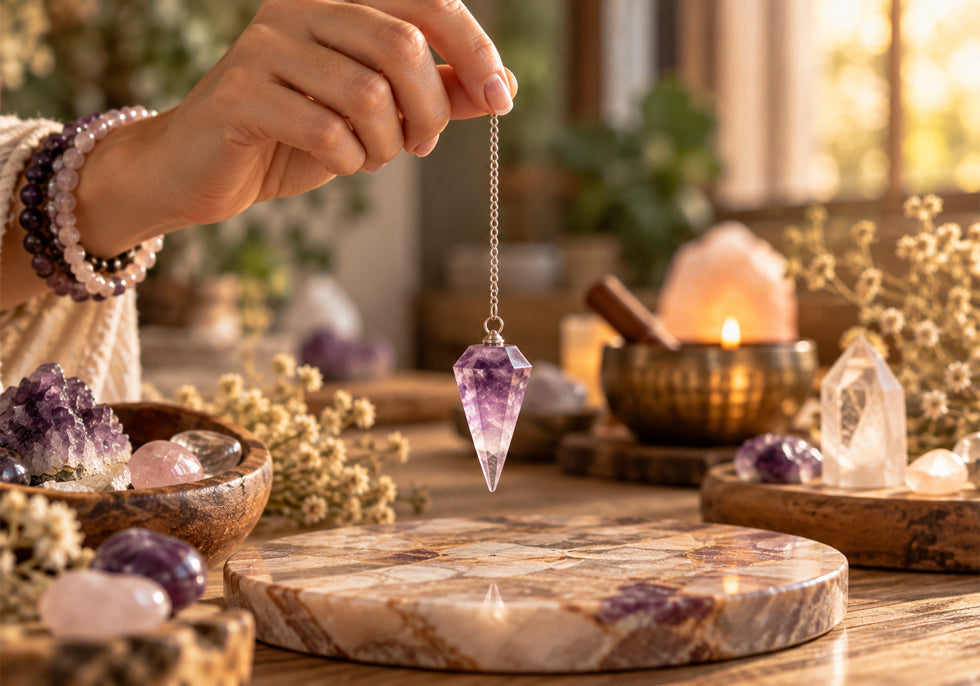
A pendulum can turn a simple question into a focused spiritual practice.
Suspended from a chain or cord, a weighted stone moves freely as it is held, and pendulums have long been used in dowsing, divination, intuitive guidance, meditation, and other spiritual traditions.
Today, crystal pendulums are also used in chakra work, energy practices, intention setting, and personal rituals. The crystal itself can become part of the experience, with different stones traditionally chosen for their colors, natural patterns, and symbolic associations.
If you are new to pendulum work, learning how to hold a pendulum, establish your yes and no movements, and ask clear questions gives you a simple place to begin.
What Is a Pendulum?
At its simplest, a pendulum is a weighted object suspended from a chain, cord, or another flexible attachment. Because the weight can move freely, even a small movement where the pendulum is held can create a visible swing.
Pendulums can be made from crystal, natural stone, metal, wood, or other materials. Crystal pendulums are especially popular because the stone becomes part of the practice through its color, texture, natural variation, and traditional symbolism.
In physics, a pendulum is a suspended weight that moves under the influence of gravity. In dowsing and spiritual practices, a handheld pendulum is traditionally used for divination, intuitive guidance, yes-or-no questions, chakra work, energy practices, and intention setting.
Many people choose a pendulum based on the stone itself and the traditional associations connected with it. Amethyst, Rose Quartz, Amazonite, Clear Quartz, and other stones are often selected because their symbolic meanings connect with different personal practices.
What Are Pendulums Used For?
Pendulums are used in many traditional and contemporary spiritual practices, including:
- Yes or no questions
- Dowsing
- Divination
- Intuitive guidance
- Meditation
- Chakra work
- Energy practices
- Intention setting
- Personal rituals
- Searching for misplaced objects
Yes or No Questions
One of the most familiar ways to use a pendulum is to ask a yes or no question and observe its movement.
Many practitioners begin by establishing what yes and no look like for them. There is no universal movement that represents a specific answer, so the first step is learning the responses you personally use during your practice.
Many people approach pendulum work as a form of intuitive guidance. Begin with clear questions, hold the pendulum calmly, and observe the movement without consciously trying to direct it.
Dowsing
Dowsing is a longstanding practice that uses tools such as pendulums or dowsing rods. Historically, dowsing has been associated with searching for water, minerals, and lost objects.
Many contemporary practitioners also use pendulums for intuitive questions, divination, energy work, and spiritual practices.
Approaches to dowsing vary across traditions, so pendulum movement is interpreted within the practitioner’s own method and practice.
Chakra work
Pendulums are commonly incorporated into chakra and energy practices. A practitioner may hold the pendulum above a chakra and observe its movement as part of meditation, energetic awareness, or a chakra-balancing ritual.
Chakra traditions are spiritual and wellness practices rather than medical diagnostic systems. Pendulum work should not replace professional medical care.
If chakra work is part of your practice, our chakra collection offers another way to bring these themes into your space.
A chakra journal can also provide a place to record thoughts, intentions, and reflections connected with your practice.
Meditation and Reflection
A pendulum can also become part of meditation, journaling, or moments of personal reflection.
Some people enjoy watching the movement of a pendulum as a way to focus attention during meditation or create space for a personal ritual. A few minutes with a pendulum, a journal, or a meditation practice can become part of a regular routine.
How to Choose a Pendulum
Choosing a pendulum often begins with the stone. You may be drawn to its color, appearance, traditional crystal associations, or the intention you want to bring into your practice.
The shape, weight, chain length, and how the pendulum feels in your hand can also help guide your choice.
Here are some stones commonly associated with pendulum and spiritual practices:
|
Stone |
Traditional Associations |
|
Amethyst |
Intuition, spiritual awareness, meditation, Crown and Third Eye Chakras |
|
Rose Quartz |
Love, compassion, emotional healing, Heart Chakra |
|
Clear Quartz |
Clarity, intention, amplification, spiritual awareness |
|
Red Jasper |
Grounding, stability, strength, Root Chakra |
|
Amazonite |
Communication, truth, harmony, balance, Heart and Throat Chakras |
|
Green Aventurine |
Luck, opportunity, prosperity, growth, Heart Chakra |
|
Lepidolite |
Calm, transition, emotional balance, reflection |
|
Opalite |
Contemporary spiritual practices, intuition, transition, emotional reflection |
|
Tiger’s Eye |
Confidence, courage, protection, focus, grounding |
|
Sunstone |
Vitality, optimism, confidence, joy |
Earths Elements offers natural stone pendulums featuring stones such as Amazonite, Amethyst, Green Aventurine, Lepidolite, Opalite, Tiger’s Eye, Red Jasper, Rose Quartz, and Sunstone. Product availability can change.
Browse our Natural Stone Pendulum Collection to find different stones and designs.
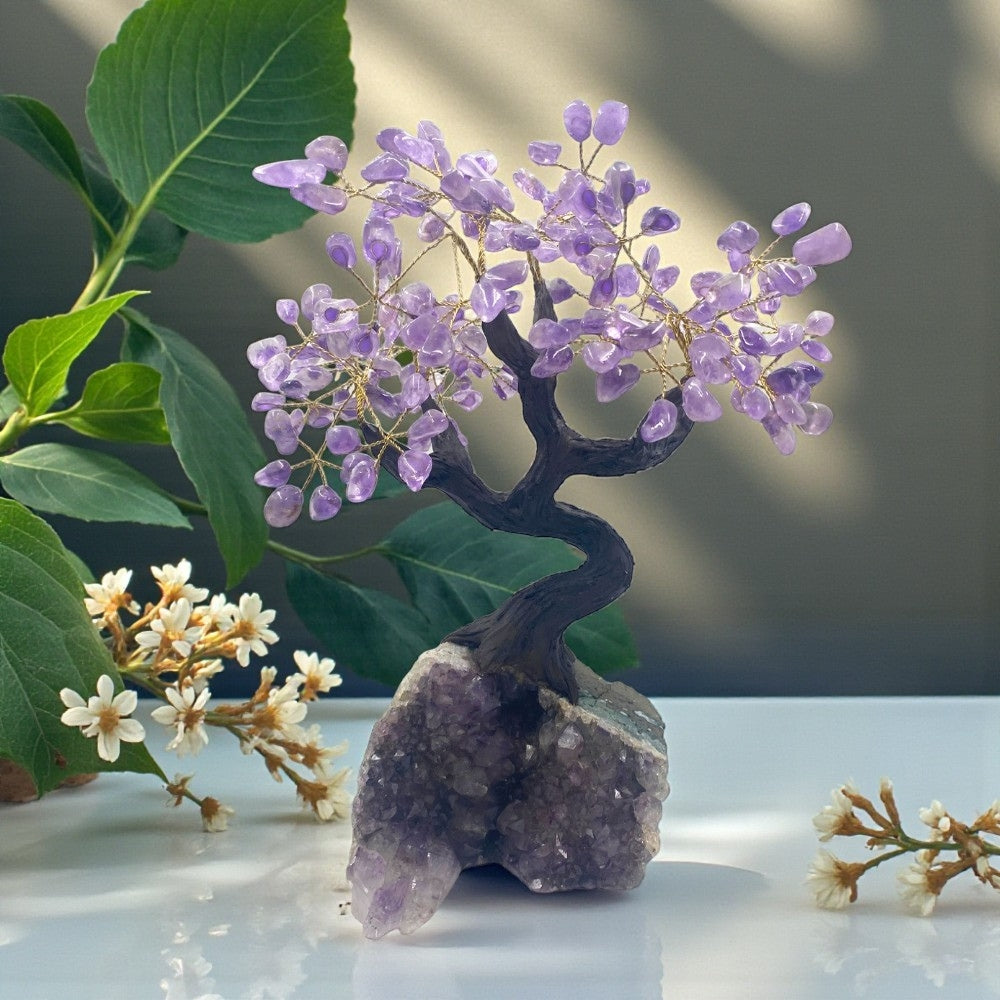
If you enjoy working with natural stones, you can also explore our Crystal Collection for additional pieces that can complement your practice.
For smaller stones to keep nearby, Tumbled Stones offer another way to connect with natural materials.
How to Hold a Pendulum
Learning how to hold a pendulum is simple.
- Sit somewhere comfortable where your arm can remain steady.
- Hold the chain lightly between your thumb and forefinger.
- Let the pendulum hang freely.
- Keep your wrist and arm relaxed.
- Wait for the pendulum to become still before beginning.
Avoid gripping the chain tightly. A relaxed hold allows the pendulum to move naturally.
Take a few slow breaths before beginning and give yourself a moment to settle your attention before working with the pendulum.
How to Use a Pendulum for Dowsing
If you are learning how to use a pendulum, begin with a simple practice.
Find a Comfortable Place
Choose a quiet area where you can sit without interruptions. A table can provide support for your arm while you become familiar with the pendulum.
Hold the Pendulum
Hold the end of the chain between your thumb and forefinger. Allow the stone to hang freely and wait until it becomes relatively still.
Establish Your Yes and No Movements
Before asking personal questions, many practitioners establish what yes and no movements look like.
Ask a question with an answer you already know and observe the movement. Repeat the process with a known no answer.
Your yes movement may be circular, side-to-side, or forward and backward. Your no movement may be different. There is no single pattern used by everyone.
Ask One Clear Question
Start with simple questions. Asking one idea at a time can make it easier to observe the pendulum’s movement.
Observe the Movement
Try not to consciously move the pendulum toward the answer you want.
Hold the chain lightly, keep your hand relaxed, and allow the movement to develop naturally before interpreting the response.
Try a Pendulum Board or Chart
Some practitioners use pendulum boards or charts containing words, letters, numbers, directions, chakras, or other choices.
A chart can provide a more structured way to work with pendulum movement and explore a personal practice.
Reflect on the Practice
After using your pendulum, take time to consider your experience.
Many people keep notes about their questions, observations, or rituals as part of developing their own relationship with pendulum practice.
FAQs
1. What is a pendulum used for?
Pendulums are traditionally used for dowsing, divination, intuitive guidance, yes-or-no questions, chakra work, energy practices, meditation, intention setting, and personal rituals. Some dowsing traditions also use pendulums when searching for water or misplaced objects.
2. Do pendulums really work?
Pendulums are longstanding tools in dowsing, divination, and spiritual practice, where their movement may be interpreted through intuition, intention, energy, or subconscious awareness.
From a scientific perspective, small involuntary hand movements, known as the ideomotor effect, can influence the movement of a handheld pendulum. There is no established scientific evidence that pendulums independently predict future events or provide guaranteed supernatural information.
3. How do you hold a pendulum correctly?
Hold the chain lightly between your thumb and forefinger and let the pendulum hang freely. Keep your hand and arm relaxed while allowing the pendulum to move naturally.
4. Can you use any crystal as a pendulum?
A crystal needs to be safely attached so it can hang and move freely. Purpose-made crystal pendulums are designed with a shape and attachment that allows them to be used for pendulum practices.
5. How do you cleanse a pendulum?
Cleansing practices vary by tradition and material. Common methods include moonlight, sound, smoke, or an intention-setting ritual. Because different crystals have different care requirements, check the needs of your specific stone before using water, salt, or prolonged direct sunlight.
6. What's the difference between a pendulum and dowsing rods?
Both are used in dowsing traditions, but they work differently. A pendulum is a suspended weight attached to a chain or cord, while dowsing rods are handheld rods that move during use.
Make the Pendulum Practice Your Own
Pendulum practice can take many forms, from traditional dowsing and divination to chakra work, meditation, intuitive guidance, and intention setting. Begin with a pendulum that feels right in your hand and a stone whose traditional associations connect with the practice you want to explore.
Learn its movement. Establish your yes and no responses. Ask clear questions. Incorporate it into meditation, chakra work, or your own spiritual rituals, and allow your relationship with the practice to develop naturally.
Explore our Natural Stone Pendulums and find the stone that connects with your practice.