

The Third Eye Chakra: A Guide to Intuition, Insight & Inner Awareness

The Third Eye Chakra: A Guide to Intuition, Insight & Inner Awareness
There are things we understand through logic, and there are things we seem to know before we can explain why. A feeling about a situation. A moment of unexpected clarity. The quiet recognition that something is right, or that something needs our attention.
Within the chakra tradition, this inner way of seeing is associated with the Third Eye Chakra, known as Ajna. The Third Eye is the sixth of the seven main chakras and is traditionally located at the brow, between the eyebrows. It is associated with perception, intuition, imagination, discernment, and inner awareness. In the modern seven-chakra system, it is commonly represented by the color indigo.
But exploring the Third Eye doesn't necessarily mean trying to become more mystical. Sometimes, it simply means becoming more attentive: quieting enough of the noise around us to notice what we think, what we feel, what we assume, and what we actually know.
In that sense, the Third Eye isn't only about intuition. It is also about clarity.
In this guide, we'll explore the meaning and symbolism of the Third Eye Chakra, how Ajna is traditionally understood, practices associated with it, crystals commonly connected with Third Eye work, and simple ways to bring greater reflection and awareness into everyday life.
What Is the Third Eye Chakra?
The Third Eye Chakra sits near the top of the traditional seven-chakra system, above the Throat Chakra and below the Crown Chakra. Its Sanskrit name, Ajna, is commonly translated as command, authority, or perception. In yogic traditions, it is associated with inner perception, concentration, discernment, and the ability to observe the workings of the mind.
That last idea is especially beautiful. We spend much of our lives looking outward at circumstances, other people, responsibilities, information, problems, and possibilities. Ajna turns some of that attention inward.
What are we noticing? What patterns keep appearing? What happens when we observe a thought before immediately believing it? What becomes visible when we give ourselves enough quiet to actually listen?
This is part of what makes the Third Eye such an intriguing symbol. It represents another kind of sight, not necessarily seeing something invisible, but learning to perceive what may have been obscured by distraction, habit, expectation, or noise.
What Does the Third Eye Chakra Represent?
The Third Eye Chakra is traditionally associated with intuition, insight, perception, imagination, wisdom, concentration, and discernment.
Those qualities are deeply interconnected.
Intuition without discernment can become assumption.
Logic without intuition can sometimes overlook what cannot yet be neatly measured or explained.
The symbolism of Ajna invites both.
It asks us to pay attention to information coming from the world around us while also becoming aware of our internal responses to it.
That might mean noticing a recurring thought.
Recognizing a pattern in our behavior.
Questioning an old assumption.
Allowing imagination to reveal a possibility we hadn't considered.
Or simply realizing that beneath all the mental chatter, we already know what our next step needs to be.
This is why the Third Eye is often described as a center of inner knowing.
Not certainty about everything.
Awareness of ourselves.
The Third Eye Chakra at a Glance
Sanskrit name: Ajna
Location: Brow, between the eyebrows
Traditional color: Indigo
Element: Often associated with light or illumination
Themes: Intuition, perception, imagination, insight, discernment, inner awareness
Commonly associated crystals: Amethyst, Labradorite, Fluorite, Lapis Lazuli, Sodalite and Clear Quartz
Is the Third Eye Chakra Really an “Eye”?
Not in the anatomical sense.
The Third Eye is a spiritual and philosophical symbol found in several traditions, although interpretations vary considerably between them.
The idea of an inner eye points toward a form of perception beyond ordinary physical sight: introspection, intuition, wisdom and the ability to observe one's own consciousness.
In modern wellness culture, the Third Eye Chakra is sometimes discussed as though it were a literal structure that can be physically “opened.”
We prefer a gentler interpretation.
Rather than trying to force something open, Third Eye practices can simply become an invitation to notice more clearly.
Meditation, contemplation, journaling, time in nature, creative practice and moments of intentional quiet can all create space for that kind of awareness.
Nothing dramatic needs to happen.
Sometimes insight arrives very quietly.
Signs Your Third Eye Chakra May Feel Out of Balance
Within contemporary chakra practices, people sometimes describe chakras as feeling balanced, blocked, overactive or underactive.
These ideas belong to spiritual and wellness traditions rather than medical diagnosis, but they can provide an interesting framework for self-reflection.
Someone exploring the Third Eye might ask whether they have been feeling:
- Mentally scattered or overwhelmed
- Disconnected from their intuition
- Stuck in repetitive thinking
- Unable to see a situation from another perspective
- Overly analytical
- Distrustful of their own judgment
- Lost in imagination without feeling grounded
- Unusually indecisive
- Disconnected from creativity or curiosity
Rather than treating these as proof that a chakra is “blocked,” we can use them as questions.
Where could I use more clarity?
What am I not seeing?
What do I know when I stop arguing with myself for a moment?
Where might I need more information before trusting my interpretation?
That combination of intuition and discernment feels particularly appropriate for Ajna.
How to Connect With the Third Eye Chakra
hird Eye practices don't need to be elaborate. In fact, one of the simplest ways to explore Ajna is to intentionally create a little more space between stimulus and response.
Before reaching for your phone in the morning, sit quietly for a few minutes. Notice your thoughts during a walk without trying to solve them. Journal without editing yourself. Meditate. Make something. Spend time somewhere that allows your mind to become spacious.
Ask yourself a question and resist the urge to immediately manufacture an answer.
The purpose isn't to make your mind completely silent. Minds are rather enthusiastic creatures. 😂 The practice is learning to observe, and that observation is one of the recurring themes associated with the Third Eye.
→ Explore the Third Eye Chakra Collection
Third Eye Chakra Meditation
Meditation is one of the practices most commonly associated with Ajna, and you don't need a complicated ritual.
Find a comfortable position and allow your breathing to settle naturally. Close your eyes if that feels comfortable, then bring your attention gently toward the space around the center of the brow. You might imagine a soft indigo light there, or simply keep your awareness on your breath.
Thoughts will appear. Let them.
Instead of following each thought down its respective rabbit hole, notice it and return your attention to the breath. Even five quiet minutes can become a practice in observation.
The intention isn't to achieve a particular mystical experience. It is simply to become present enough to notice.

Crystals Associated With the Third Eye Chakra
Crystals have long been incorporated into spiritual, cultural and contemplative practices around the world, and certain stones have become especially associated with the Third Eye Chakra in modern crystal traditions.
They aren't required for chakra work, of course.
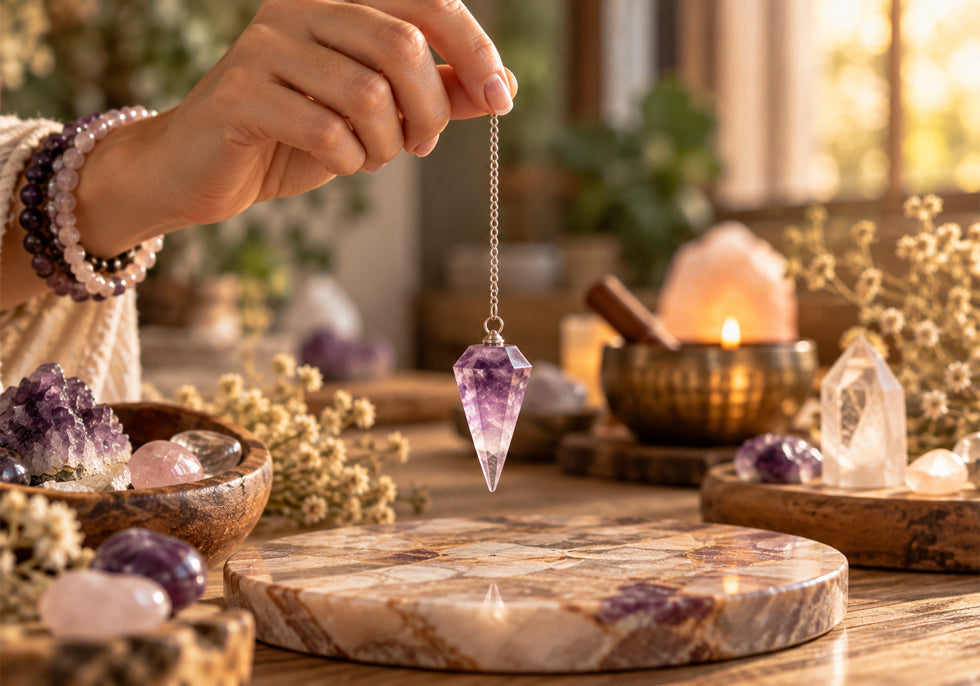
But they can serve as beautiful physical reminders of an intention: something to hold during meditation, place beside a journal, wear as jewelry, or keep somewhere you regularly pause and reflect.
Among the stones most commonly connected with Ajna are:
Amethyst
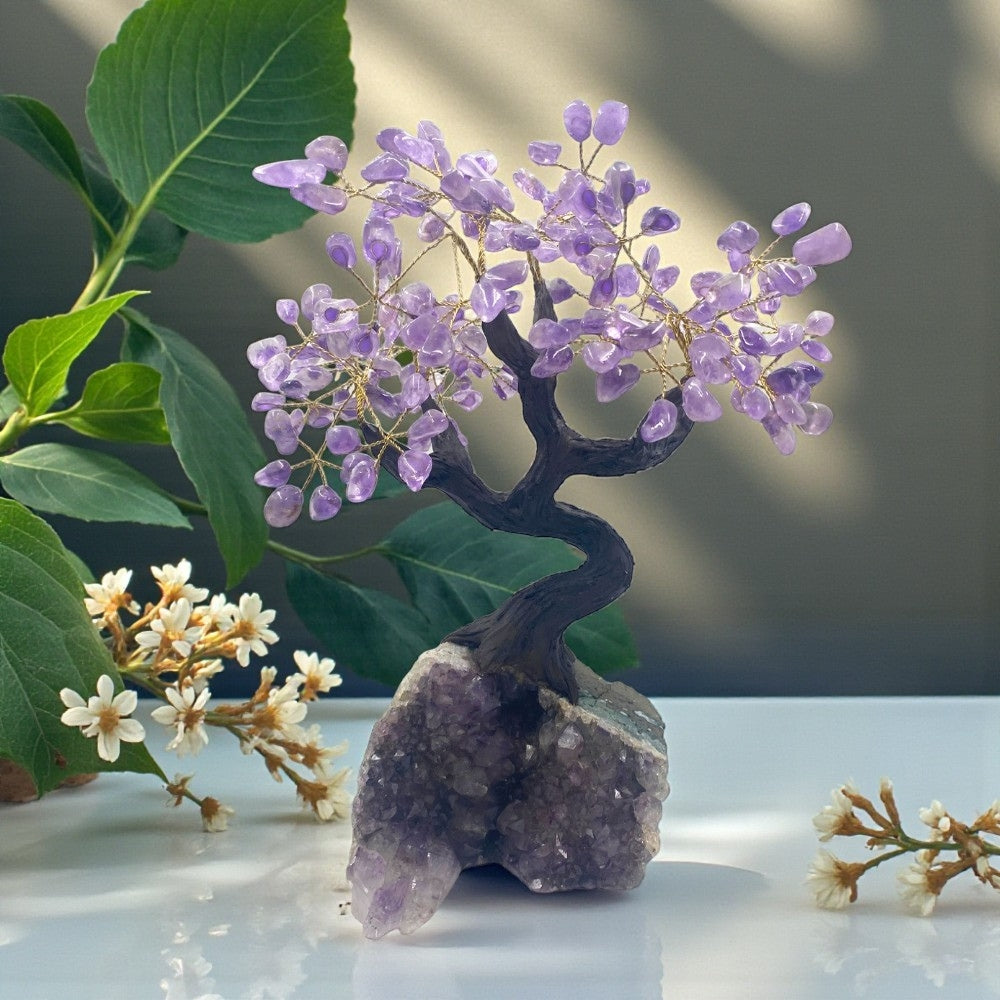
Perhaps the crystal most closely associated with the Third Eye, Amethyst is traditionally connected with intuition, spiritual awareness, tranquility and clarity.
Its violet-to-purple color naturally complements the indigo symbolism surrounding Ajna, and it is frequently used during meditation and contemplative practices.
Amethyst can be placed near your meditation space, carried as a small stone, worn as jewelry, or simply kept somewhere that reminds you to pause.
Labradorite
Few stones look quite as mysterious as Labradorite.
At first glance it can appear gray or dark, but when light strikes it from the right angle, flashes of blue, green, gold and sometimes violet emerge from within the stone.
That shifting appearance has helped make Labradorite a symbol of intuition, transformation and seeing beyond the immediately obvious.
Which, frankly, makes it a rather perfect Third Eye stone. 👁️
Fluorite
Fluorite is traditionally associated with clarity, focus, organization and discernment.
Purple and rainbow Fluorite are particularly common in Third Eye practices, where the stone is often used as a symbolic companion for concentration and clearing mental clutter.
For a chakra centered around perception, the association with clarity makes intuitive sense.
Lapis Lazuli
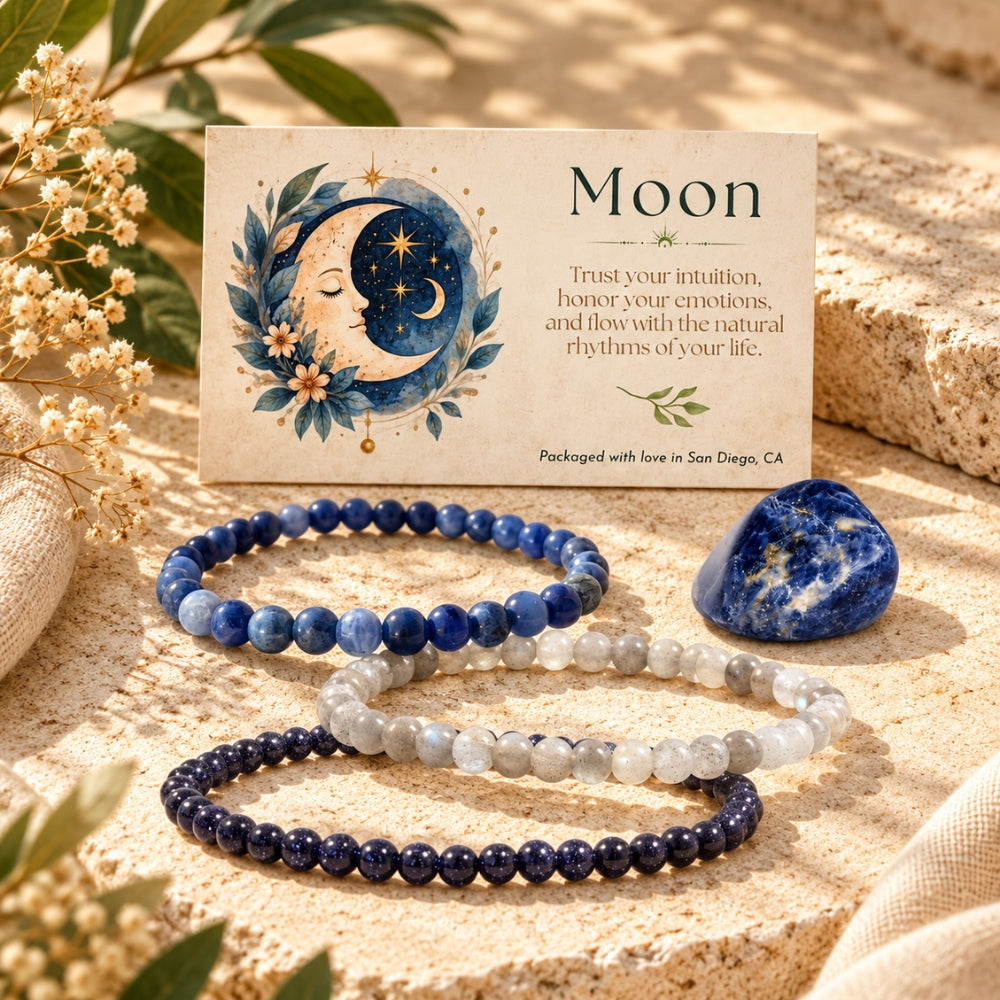
With its deep blue color and occasional golden flecks of pyrite, Lapis Lazuli has been treasured for thousands of years.
In modern crystal traditions it is associated with wisdom, truth, insight and self-awareness and is often connected with both the Third Eye and Throat Chakras.
That pairing is interesting in itself.
First, we perceive.
Then, perhaps, we find the words to express what we have understood.
Sodalite
Deep blue Sodalite is commonly associated with intuition, truth, communication and rational thought.
Its traditional symbolism beautifully illustrates one of the themes running through Ajna: intuition doesn't necessarily oppose reason.
Ideally, the two can inform one another.
Clear Quartz
Clear Quartz is commonly associated with clarity and intention and is often used alongside other crystals in contemporary chakra practices.
Because it isn't tied exclusively to one chakra, it can be an easy addition to a meditation space or crystal arrangement centered around Ajna.
Explore crystals, jewelry, incense, singing bowls and other pieces selected around these traditions in our Third Eye Chakra Collection:
→ Explore the Third Eye Chakra Collection
Using Third Eye Crystals in Everyday Life
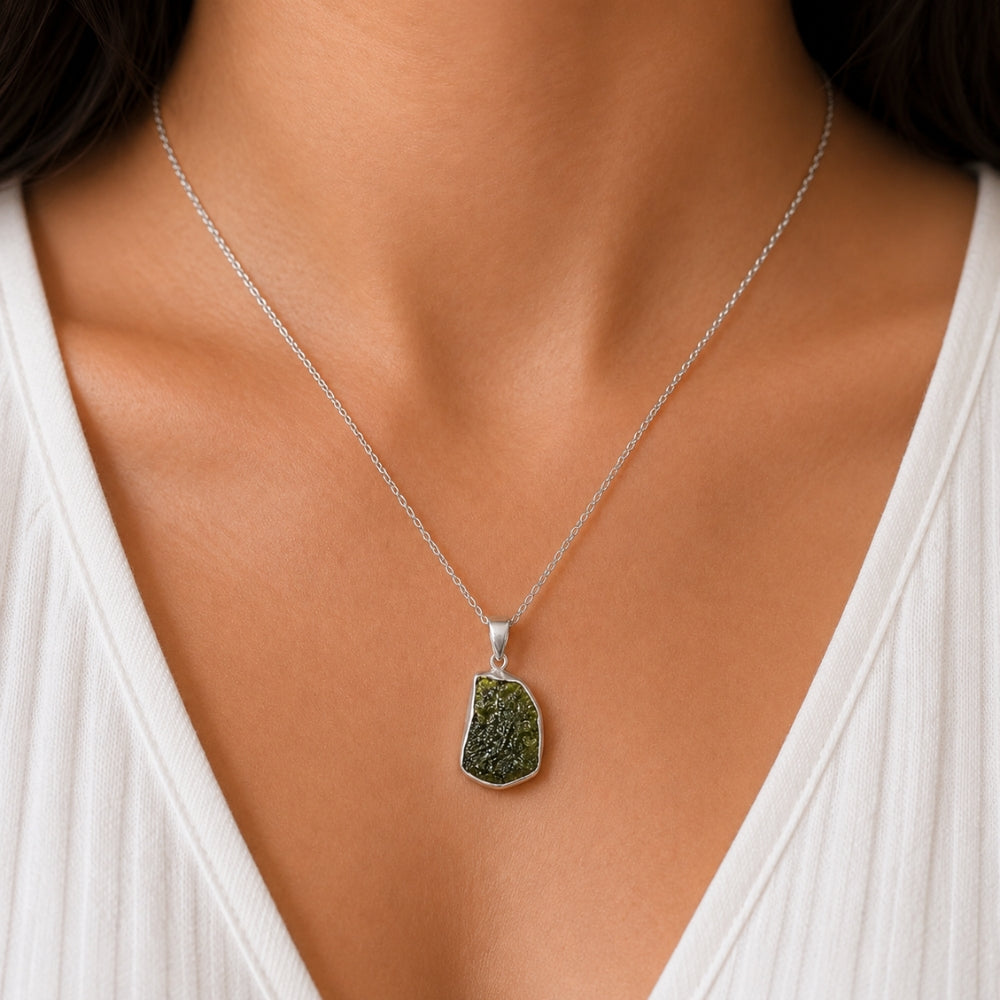
There is no single correct way to work with a crystal. You might hold one during meditation, place one beside your journal, keep a stone on your desk as a reminder to pause before making an important decision, or wear a crystal pendant.
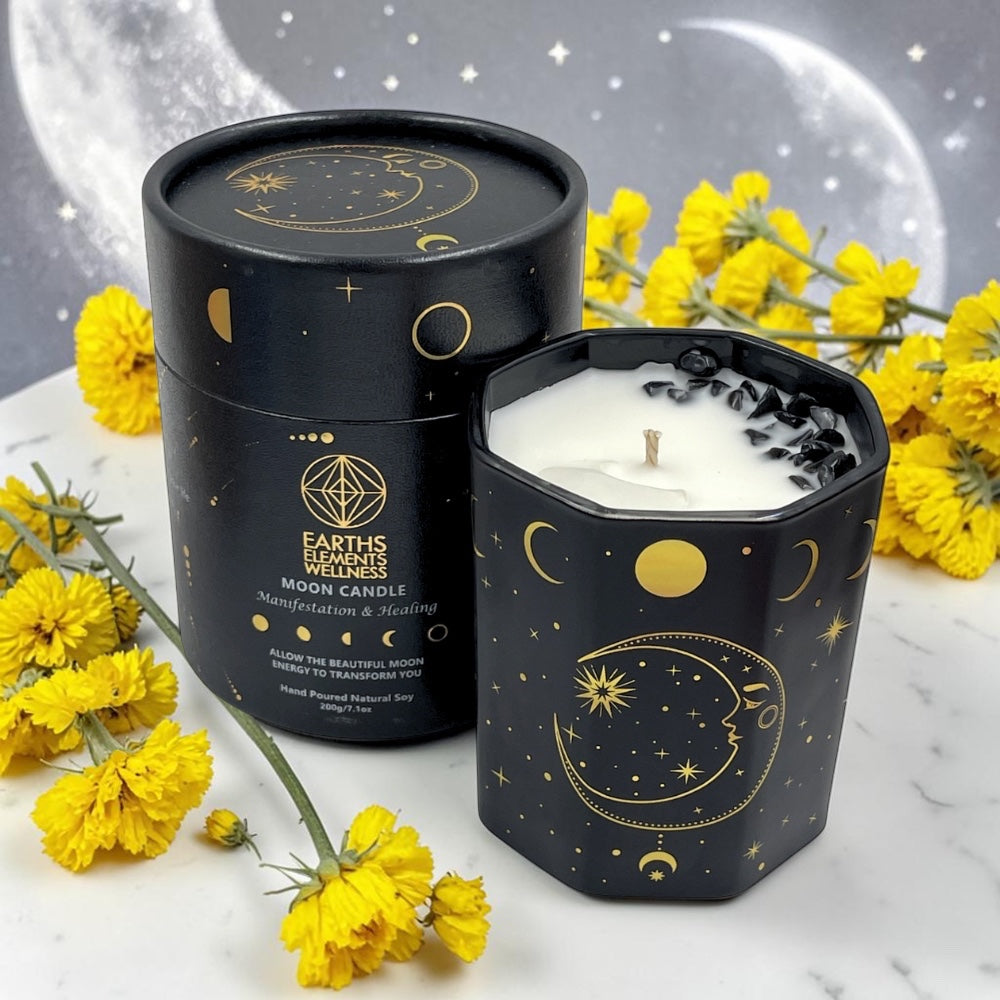
You might also create a small intentional space with a candle, incense or singing bowl. Or simply choose a stone because you find it beautiful. That counts too.
Ritual does not need to be complicated to become meaningful. Often, the object simply becomes a marker: when I see this, I remember what I am practicing.
For Third Eye work, that intention might be: Pay attention. Trust what you notice. Leave room for curiosity.
Third Eye Chakra Affirmations
Affirmations can also be used as prompts for reflection.
Rather than repeating words you don't believe and hoping your mind eventually surrenders, choose statements that feel spacious enough to explore.
For Third Eye work, you might try:
I trust myself to notice what matters.
I make space for clarity.
I am willing to see things differently.
I listen to my intuition and use discernment.
I can observe my thoughts without becoming every thought.
I remain curious about what I do not yet understand.
I trust clarity to arrive in its own time.
Choose one that catches you.
Write it somewhere.
Return to it occasionally.
See whether its meaning changes.
Journaling for the Third Eye Chakra
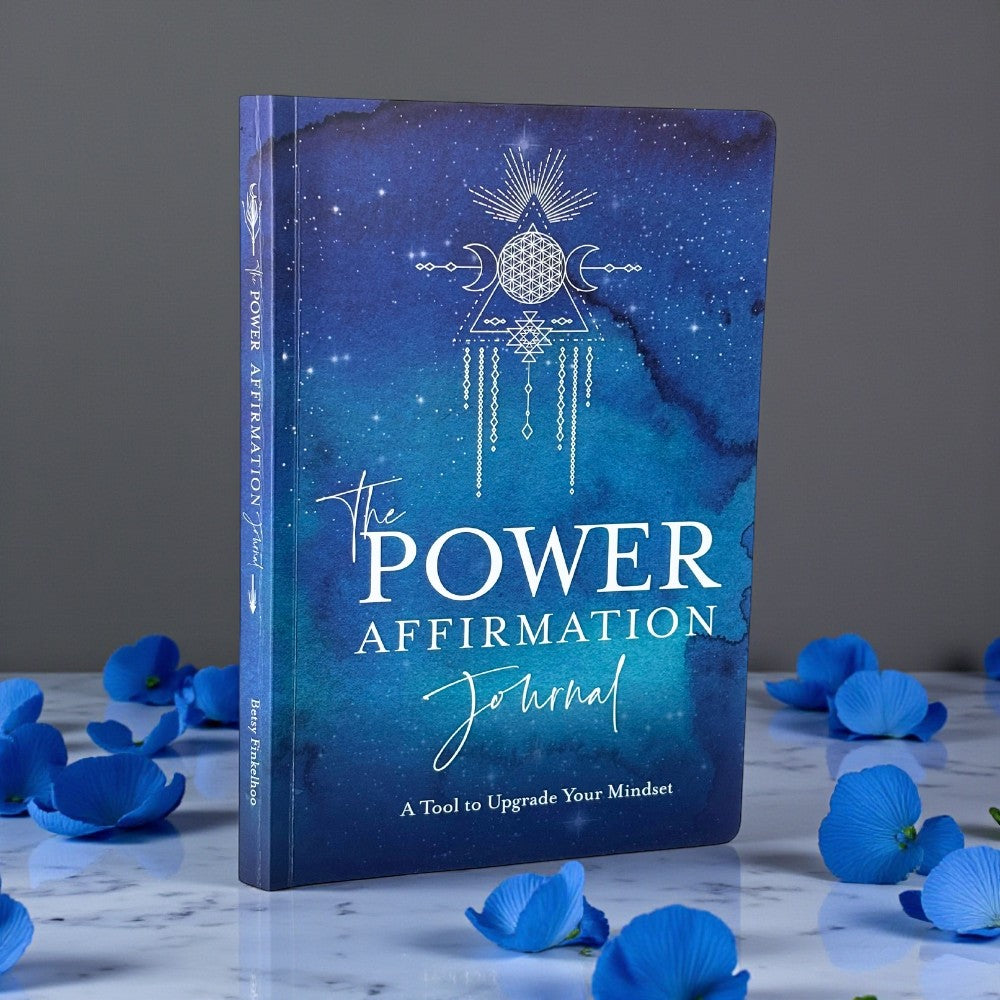
Because Ajna is associated with observation and inner awareness, journaling can be an especially natural Third Eye practice.
Try beginning with one question rather than attempting to solve your entire existence before breakfast. 😂 You might ask:
What am I noticing lately?
What keeps asking for my attention?
Where am I seeking certainty when curiosity might serve me better?
What do I believe about this situation, and what do I actually know?
What would I see differently if I looked at this from another perspective?
What feels quietly true right now?
Then write without worrying about making the answer beautiful. You may surprise yourself.
The Third Eye and Intuition
Intuition is probably the word most often associated with the Third Eye Chakra. But intuition doesn't always arrive as a thunderbolt. Sometimes it is subtle: a hesitation, a sense of recognition, an unexpected idea, a pattern you've noticed several times, or simply a feeling that you need more information.
Sometimes it's the strange relief that appears when you finally admit something to yourself that you've known for a while.
And intuition doesn't mean abandoning critical thinking. Quite the opposite. The deeper invitation of Ajna may be learning how to listen to our internal signals while remaining curious enough to question our interpretations.
Intuition can offer information. Discernment helps us decide what to do with it.
Creating a Third Eye Ritual
If you'd like to create a simple ritual around Ajna, begin with whatever already feels natural to you. Light a candle or burn a little incense. Choose an Amethyst, Labradorite or Fluorite stone, find somewhere quiet, and take several slow breaths.
If you use a singing bowl, allow its sound to mark the beginning of your practice. Then ask yourself one question. Not ten. Just one.
And listen.
You don't need an immediate answer. Sometimes the practice is simply making room for one.
Can Anyone Work With the Third Eye Chakra?
Yes. You don't need to practice yoga, follow a particular spiritual path or consider yourself especially intuitive to explore the symbolism of Ajna. You can approach the chakra system spiritually, philosophically, symbolically or simply with curiosity.
It is also worth remembering that chakra traditions have deep roots in Indian spiritual and philosophical systems, while modern Western interpretations have evolved considerably from their historical origins. Approaching them with curiosity and respect leaves room for both tradition and personal exploration.
→ Explore the Third Eye Chakra Collection
Third Eye Chakra FAQ
What is the Third Eye Chakra?
The Third Eye Chakra, or Ajna, is the sixth chakra in the traditional seven-chakra system. Located at the brow between the eyebrows, it is commonly associated with intuition, perception, insight, imagination, discernment and inner awareness.
What does Ajna mean?
Ajna is a Sanskrit word commonly translated as “command,” “authority” or “perception.” In yogic traditions, it is associated with inner perception, concentration and awareness of the mind.
Where is the Third Eye Chakra located?
The Third Eye Chakra is traditionally associated with the center of the brow, between and slightly above the eyebrows. This location is symbolic within chakra traditions rather than a physical anatomical structure.
What color is the Third Eye Chakra?
In the modern seven-chakra system, the Third Eye Chakra is most commonly represented by indigo, a deep blue-violet color associated with insight, intuition and inner awareness.
What crystals are associated with the Third Eye Chakra?
Crystals commonly associated with the Third Eye Chakra include Amethyst, Labradorite, Fluorite, Lapis Lazuli, Sodalite and Clear Quartz. In contemporary crystal practices, these stones are often connected with themes such as intuition, clarity, perception and reflection.
Seeing More Clearly
Perhaps the Third Eye isn't asking us to see another world. Perhaps it is asking us to become more awake inside this one.
To notice our patterns and question our assumptions. To listen to our instincts without becoming ruled by them. To allow imagination to coexist with reason, remain curious, and create enough quiet within ourselves to recognize clarity when it arrives.
There will always be things we understand through logic, and there may always be things we somehow know before we understand why.
Somewhere between those two ways of knowing is a fascinating place to pay attention.
→ Explore the Third Eye Chakra Collection