



How to Play a Steel Tongue Drum: A Beginner's Guide
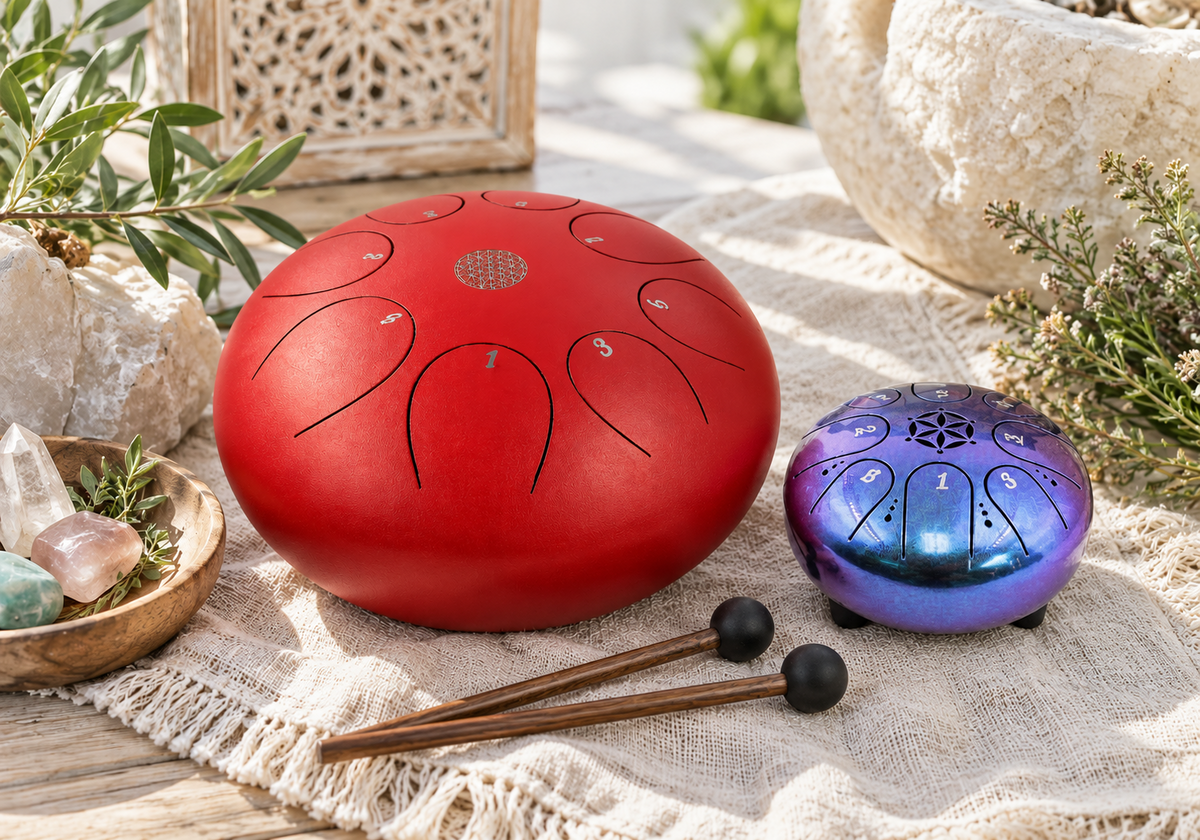
Tap a steel tongue drum once and listen to what happens next. The note continues ringing after the mallet lifts, filling the air with a soft, resonant tone before gradually fading away. This distinctive sound has made steel tongue drums popular for meditation, yoga, sound baths, and moments of relaxation.
Steel tongue drums are accessible to beginners, even without musical experience. Each tongue produces a particular pitch, and many drums are tuned to musical scales that make it easy to explore melodies and rhythms intuitively.
In this guide, we'll explore how steel tongue drums work, how to play them with mallets or fingers, simple patterns for beginners, and ways to incorporate their sound into meditation, sound healing, and chakra practices.
What Is a Steel Tongue Drum?
A steel tongue drum is a melodic percussion instrument made from a hollow metal body with precisely cut tongues on its playing surface. Each tongue vibrates when struck, producing a particular musical note. The hollow body helps amplify the sound, creating the sustained, resonant tones associated with the instrument.
Modern steel tongue drums draw inspiration from earlier slit-drum traditions and more recent developments in melodic metal percussion. One influential design was the Hank Drum, developed by Dennis Havlena in 2007 using a repurposed propane tank.
Today, steel tongue drums are available in different sizes, tunings, and note arrangements. Their accessible playing style makes them popular with beginners, musicians, meditation practitioners, and sound healing enthusiasts.
The resonant tone can anchor breathwork or a few minutes of intentional listening, and it joins singing bowls in a layered sound practice.
Steel Tongue Drum vs. Steel Drum
Although their names sound similar, steel tongue drums and steel drums are different instruments. A steel drum, also called a steelpan, originated in Trinidad and Tobago. It has a specially shaped, tuned playing surface and is commonly played with rubber-tipped sticks.
A steel tongue drum produces notes through individually cut metal tongues that vibrate when struck. It is generally played with mallets or fingertips and is often used for melodic improvisation, meditation, and sound practices. This guide focuses specifically on steel tongue drums.
How to Play a Steel Tongue Drum, Step by Step
- Find a comfortable playing position. Place the drum on a stable surface or rest it comfortably in your lap. Make sure the instrument is supported without blocking its sound openings or interfering with the vibration of its body. If your drum has rubber feet or built-in supports, use them as intended.
- Hold the mallets gently. Hold a mallet loosely in each hand, allowing the heads to move naturally. A relaxed grip helps create a clear tone without striking the instrument too forcefully.
- Strike a tongue lightly. Gently tap one of the metal tongues with a mallet and allow the mallet to rebound immediately. Avoid pressing the mallet against the surface, as this can interrupt the vibration and shorten the note.
- Listen to the resonance. Let the note ring and notice how it gradually fades. Beginners can start by allowing each note to finish before playing another, then experiment with overlapping notes to create flowing melodies.
- Explore the different pitches. Play each tongue individually to become familiar with its sound. Depending on the instrument's tuning and layout, the tongues produce different musical notes. Try moving between higher and lower pitches and listening to how they interact.
- Create a simple rhythm. Choose two or three notes and repeat them in a gentle pattern. Experiment with changing the speed, spacing, or order of the notes. You don't need to read music to begin creating your own melodies.
Playing with Mallets or Fingers
Steel tongue drums can be played with mallets or fingertips, although the experience and resulting tone may differ.
- Playing with Mallets: Mallets are generally the easiest option for beginners. A light strike followed by an immediate rebound allows the tongue to vibrate freely, producing a clear, sustained note.
- Playing with Fingers: Finger playing offers a more direct, tactile connection with the instrument. Use a quick tap with the fingertip and lift away immediately. Finger playing may produce a softer or more muted tone, depending on the drum and technique.
- Controlling the Sound: You can experiment with gently dampening a vibrating tongue to shorten a note. This allows you to create pauses and rhythmic variation.
Both techniques can be used for melodies, improvisation, meditation, and sound practices. Start with mallets, then experiment with finger playing as you become comfortable with the instrument.
Four Easy Steel Tongue Drum Patterns for Beginners
- Explore the Scale: Play each note individually, starting with the lowest pitch and gradually moving toward the highest. If your drum includes a note chart, use it to identify the order of the notes. Then reverse the pattern.
- Two-Note Rhythm: Choose two notes that sound pleasing together. Alternate between them at a comfortable pace, allowing the rhythm to develop naturally.
- Three-Note Melody: Select three notes and play them in a repeating sequence. Once the pattern feels familiar, change the order or replace one note to create a new melody.
- Pulse and Melody: Choose a lower note to establish a steady pulse. Use your other hand to play a simple melody on the remaining tongues. Begin slowly and increase the tempo as you become more comfortable.
A Three-Minute Steel Tongue Drum Meditation
You don't need a long session to enjoy the meditative qualities of a steel tongue drum. Try this three-minute practice:
- Minute One (Listen): Sit comfortably, take a few slow breaths, and gently strike a single note. Allow the sound to resonate and fade before playing it again.
- Minute Two (Create a Rhythm): Choose two or three notes and play a slow, repeating pattern. Focus on the sound, the spaces between notes, and the natural rhythm of your breathing.
- Minute Three (Return to Stillness): Gradually slow your playing. Finish with a single note and listen until the sound fades completely.
This practice can be incorporated into morning meditation, yoga, an evening wind-down routine, or any moment when you want to reconnect with sound and stillness.
Steel Tongue Drums in Sound Healing, Meditation, and Chakra Practice
Steel tongue drums are often incorporated into sound healing, sound baths, meditation, yoga, Reiki, and energy work. Their sustained, resonant tones can help establish a rhythm for meditation, support intentional listening, and create an immersive sound experience.
In chakra practices, sound may be incorporated into meditation focused on the body's seven energy centers. Each chakra carries traditional associations with particular aspects of physical, emotional, and spiritual experience.
To incorporate a steel tongue drum into chakra meditation, choose a chakra as your focus, reflect on its traditional associations, and play a slow sequence of notes while maintaining that intention.
You can also combine steel tongue drums with singing bowls or other sound instruments to create a layered sound meditation.
- Root: stability, security, grounding
- Sacral: creativity, emotion, sensuality
- Solar Plexus: confidence, personal power, self-esteem
- Heart: love, compassion, connection
- Throat: communication, truth, expression
- Third Eye: intuition, insight, perception
- Crown: spirituality, wisdom, higher consciousness
Explore each center in our chakra collections.
For a layered session, pair the drum's clear, distinct notes with the long, humming sustain of a metal singing bowl, or light a stick of incense to mark the start.
Choosing Your Steel Tongue Drum: 5, 10, or 12 Inch
Steel tongue drums are available in different sizes, tunings, and note arrangements. When choosing your first drum, consider portability, sound, musical range, and how you plan to use it.
Smaller drums are generally easier to transport, while larger instruments may offer different tonal characteristics and playing experiences. However, size alone does not determine the number of notes, tuning, or overall sound.
|
Size |
What to Know |
Often Chosen For |
|
Compact, portable design |
Travel, gifting, beginner exploration |
|
|
Mid-sized instrument for regular practice |
Home meditation, yoga, sound practices |
|
|
Our largest drum, with a larger playing surface. |
Home practice, sound baths, extended sessions |
Once the exact product specifications are confirmed, please add the relevant details back into the table. Browse every size and color in our steel tongue drums collection.
Caring for Your Steel Tongue Drum
Keep your steel tongue drum clean and dry between sessions. Wipe the surface gently with a soft, dry cloth after playing, and store the instrument in a dry location away from excessive moisture.
If your drum includes a protective sleeve or carrying case, use it during storage or transport. Avoid dropping the instrument or striking it with excessive force, as damage to the tongues or body may affect its sound.
Follow any additional care instructions provided with your particular instrument.
Frequently Asked Questions
1. What is a steel tongue drum?
A steel tongue drum is a melodic percussion instrument with tuned metal tongues cut into its playing surface. Each tongue produces a musical note when struck with a mallet or fingertip.
2. Do I need musical experience to play?
No. Steel tongue drums are beginner-friendly instruments, and many are tuned to scales that make improvisation accessible without formal musical training. You can begin by exploring individual notes and simple repeating patterns.
3. Should I play with mallets or fingers?
Both techniques are possible. Mallets generally produce clearer, more sustained tones and are easier for beginners. Finger playing offers a more direct touch and may produce a softer sound.
4. Is a steel drum the same as a steel tongue drum?
No. A steel drum, or steelpan, comes from Trinidad and Tobago and has a hammered, dish-shaped surface. A steel tongue drum has a flat top with cut tongues.
5. How long should I play?
Start with a few minutes and gradually explore longer sessions. Even a three-minute practice can introduce you to the instrument's sound and help you develop confidence with basic rhythms.
6. Which size should I choose?
A 5-inch drum is compact and portable, while 10-inch and 12-inch drums offer larger playing surfaces. Compare the tuning, number of notes, sound characteristics, and included accessories before choosing the instrument that best suits your needs.
7. How do I care for a steel tongue drum?
Store it in its sleeve or case, wipe it with a soft, dry cloth, and keep it dry.
8. How is a steel tongue drum used in sound healing and meditation?
Steel tongue drums are used in meditation, sound baths, yoga, Reiki, chakra practices, and other forms of energy work. Their resonant tones can be incorporated into breathing exercises, intentional listening, and sound meditation, either on their own or alongside instruments such as singing bowls.
9. Can you play songs on a steel tongue drum?
Yes. Steel tongue drums can be used to play simple melodies, repeating patterns, and musical arrangements. The songs you can play depend on the instrument's tuning, available notes, and musical range. Many beginners start by improvising before learning specific melodies.
Begin With One Note
Learning to play a steel tongue drum begins with a single note. As you explore different rhythms, melodies, and playing techniques, the instrument can become part of your meditation, creative expression, or sound healing practice.
Whether you're looking for a compact drum to explore at home or a larger instrument for regular sound sessions, discover the different sizes and styles in our Steel Tongue Drums Collection.