



How to Use a Crystal Pyramid: Meaning, Placement, and Spiritual Practices
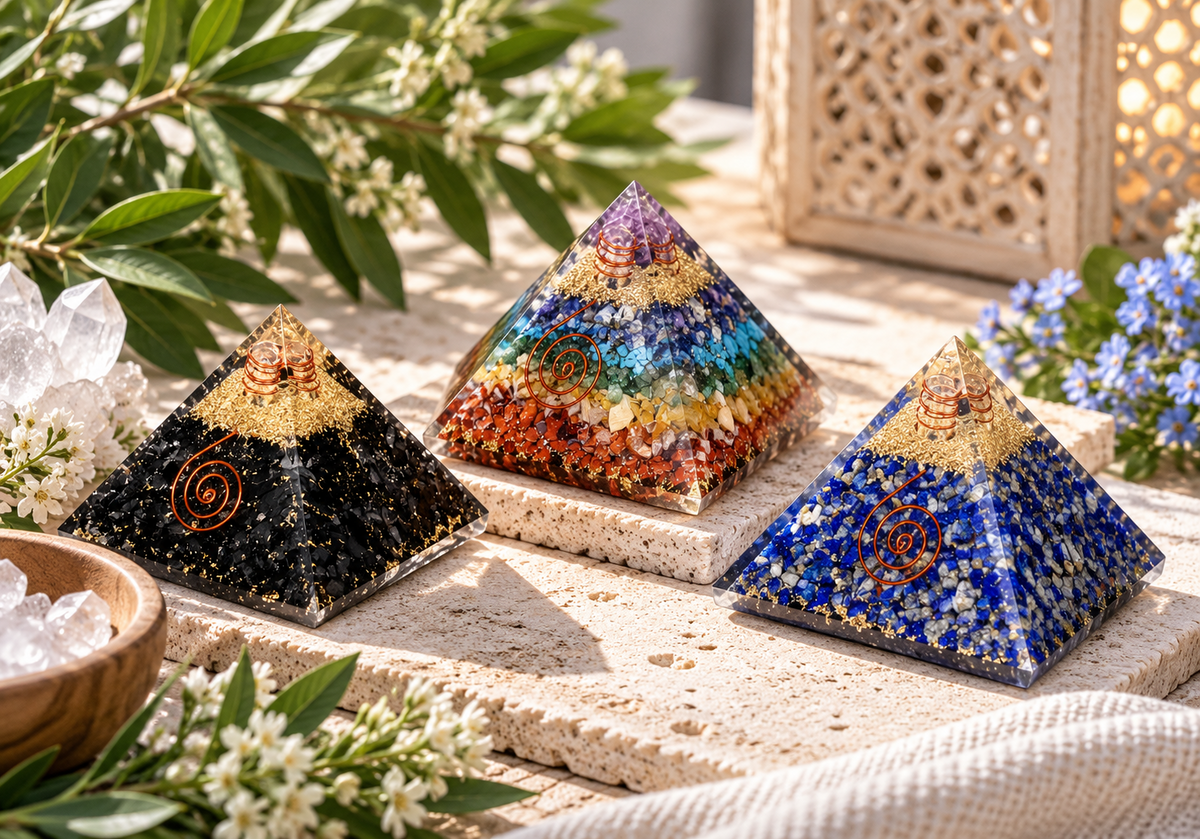
The pyramid is one of the most recognizable forms in sacred geometry. With its stable foundation and sides rising toward a single point, it has long captured the human imagination as a symbol of stability, aspiration, and connection between the physical and spiritual.
In contemporary spiritual practices, the pyramid is associated with manifestation, energy amplification, and the focused direction of intention. At Earths Elements, our crystal and orgonite pyramids bring this symbolic geometry together with gemstones, minerals, and other meaningful materials. From the grounding associations of Shungite to the luminous appearance of Opalite and the layered construction of orgonite, each pyramid offers a different way to incorporate intention into a space.
But how do you use a crystal pyramid, where should you place it, and what makes the combination of gemstones, copper, and sacred geometry significant?
In this guide, we'll explore crystal pyramid meanings, meditation practices, placement ideas, the symbolism behind orgonite pyramids, and a simple seven-breath chakra meditation.
What Is a Crystal Pyramid Used For?
A crystal pyramid is a pyramid-shaped object made from natural stone, gemstone material, manufactured glass, or a combination of materials such as resin, crystals, and metal.
Crystal pyramids are commonly used in meditation, intention setting, manifestation rituals, spiritual displays, and contemporary energy-work traditions.
The pyramid shape carries three central associations in our Earths Elements Sacred Shapes & Symbols guide:
- Manifestation: The pyramid's broad foundation and ascending point can symbolize the process of turning an intention into focused action and giving direction to personal goals.
- Energy Amplification: Within contemporary spiritual traditions, the converging sides of the pyramid are associated with concentrating or symbolically amplifying intention and focus.
-
Sacred Geometry: The pyramid represents the relationship between geometric form and spiritual meaning, with its stable base and ascending point often interpreted as a connection between grounding and aspiration.
The material adds another layer of symbolism. A solid Shungite pyramid may be chosen for grounding and protection intentions, while an Opalite pyramid may appeal to someone working with calm, reflection, and intuition. Orgonite pyramids combine multiple materials, creating a different visual and symbolic experience.
How to Meditate with a Crystal Pyramid
A crystal pyramid can serve as a visual anchor during meditation, helping you focus on a particular intention or quality you wish to cultivate.
A Simple Six-Step Practice
- Choose Your Pyramid: Select one that reflects your intention, such as Shungite for grounding, Opalite for calm and intuition, or a seven-chakra orgonite pyramid for chakra-focused meditation.
- Create Your Space: Place the pyramid on a stable surface where you can comfortably see it.
- Set Your Intention: Choose a simple statement or quality you want to focus on, such as clarity, confidence, protection, or inner balance.
- Focus on the Shape: Observe the pyramid's stable base and the way its sides rise toward the apex.
- Visualize Your Intention: Imagine your attention moving from the foundation toward the point, bringing greater clarity and direction to your chosen intention.
- Close With Reflection: Take a final slow breath, open your eyes, and consider how you might carry that intention into your day.
The pyramid can remain in your meditation space as a visual reminder of your practice.
Where to Place a Crystal Pyramid at Home
|
Place |
Why Choose This Spot |
Suggested Intention |
|
Altar or meditation space |
Creates a visual focus for spiritual practice |
Meditation, reflection, chakra work |
|
Desk or workspace |
Keeps a symbolic reminder of goals nearby |
Creativity, clarity, manifestation |
|
Living room shelf |
Highlights the pyramid's geometry and materials |
Intentional décor, harmony, inspiration |
|
Bedside table |
Provides a visual focus for evening reflection |
Gratitude, journaling, calm |
Always place pyramids on stable surfaces, away from edges where they could fall.
There is no universal requirement for a crystal pyramid to face a particular compass direction. Some practitioners incorporate directional placement into their personal rituals, but it is not necessary for general meditation or intention setting.
Understanding Different Crystal Pyramid Materials
The material of a crystal pyramid can influence its appearance and traditional spiritual associations.
Shungite Pyramids
Shungite is a naturally occurring carbon-rich material commonly associated in contemporary metaphysical traditions with grounding, protection, and energetic cleansing.
A Shungite Pyramid brings together the dark appearance of Shungite with the symbolic geometry of the pyramid. It may appeal to someone who incorporates grounding intentions, protection symbolism, or quiet reflection into their spiritual practice.
A solid Shungite pyramid differs from a Shungite Orgonite Pyramid, which combines mineral materials with resin, metallic elements, and a copper spiral.
Opalite Pyramids
Opalite is a manufactured glass material known for its translucent, opalescent appearance and soft, luminous colors.
Within contemporary metaphysical practices, Opalite is associated with calm, reflection, intuition, and spiritual awareness.
An Opalite Pyramid combines these associations with the symbolism of sacred geometry. Its luminous appearance also makes it an attractive decorative piece for meditation spaces, shelves, desks, and altars.
Orgonite Crystal Pyramids
Orgonite pyramids are composite pieces typically made from resin, metallic materials, and crystals or mineral inclusions.
Our Earths Elements orgonite pyramid collection features gemstone or mineral pieces, gold-toned metallic elements, and distinctive visible copper spirals. The copper spiral adds an additional layer of symbolism connected with movement, growth, and the circulation of energy.
In contemporary metaphysical traditions, orgonite is associated with energetic balance, intention setting, and spiritual reflection. Unlike a solid stone pyramid, an orgonite pyramid combines multiple materials within a layered structure.
The Meaning Behind Orgonite Pyramids: Quartz, Copper, and Sacred Geometry
Orgonite pyramids bring together several materials and symbols, each with its own physical properties and spiritual associations.
Our Earths Elements orgonite pyramids feature gemstone or mineral pieces suspended in resin, metallic elements, and distinctive copper spirals. Together, these components create a layered design that combines natural materials with the symbolism of sacred geometry.
Quartz and the Piezoelectric Effect
Quartz has a measurable physical property called the piezoelectric effect: when it experiences mechanical pressure, its crystal structure can generate a small electrical charge, which is why quartz is used in precision timing devices and sensors. In contemporary orgonite traditions, quartz is valued for its symbolic associations with clarity, energy amplification, and intention setting.
Why Is Copper Used in Orgonite Pyramids?
Copper is known for its excellent electrical and thermal conductivity. Beyond its practical applications, it has a long history in jewelry, decorative objects, and spiritual traditions.
Within contemporary metaphysical practices, copper is often associated with energy flow, circulation, and amplification. The copper spiral visible inside our orgonite pyramids adds another layer of symbolism.
Spirals are frequently associated with movement, growth, cycles, and transformation. The combination of copper, gemstones, and sacred geometry creates a visually distinctive piece that can serve as a meaningful focus for meditation and intention-setting practices.
Why the Pyramid Shape Matters
The pyramid is one of the most recognizable forms in sacred geometry. Its broad base represents stability and grounding, while its ascending sides converge toward a single point.
In contemporary spiritual interpretations, this movement from foundation to apex symbolizes the journey from intention to manifestation.
In our Sacred Shapes & Symbols guide, the pyramid is associated with:
- Manifestation: Giving form and direction to goals and intentions.
- Energy Amplification: Symbolically strengthening focus and intention.
- Sacred Geometry: Exploring the relationship between geometric form and spiritual meaning.
When these associations are combined with gemstones, copper spirals, and the layered construction of orgonite, the result is a meaningful object for meditation, visualization, and intentional living.
Using a Seven-Chakra Orgonite Pyramid
A seven-chakra orgonite pyramid brings together the symbolism of the seven chakras in one geometric piece.
In traditional chakra systems, each chakra is associated with particular qualities:
|
Chakra |
Traditional Associations |
|
Root |
Stability, Security, Grounding |
|
Sacral |
Creativity, Emotion, Sensuality |
|
Solar Plexus |
Confidence, Personal Power, Self-Esteem |
|
Heart (Anahata) |
Love, Compassion, Connection |
|
Throat |
Communication, Truth, Expression |
|
Third Eye |
Intuition, Insight, Perception |
|
Crown |
Spirituality, Wisdom, Higher Consciousness |
The 7 Chakras Orgonite Pyramid incorporates gemstone materials, resin, metallic elements, and a copper coil into a design representing the seven-chakra system.
You can place it in a meditation area and select one chakra to focus on during a session. Another approach is to move through the seven centers in sequence, reflecting on the qualities traditionally associated with each.
A Seven-Breath Chakra Meditation
Place your seven-chakra pyramid on a stable surface where you can comfortably see it.
Take a moment to settle your attention, then move through the seven chakras with one slow breath for each.
- Root: Breathe in stability, security, and grounding.
- Sacral: Welcome creativity, emotion, and sensuality.
- Solar Plexus: Focus on confidence, personal power, and self-esteem.
- Heart: Invite love, compassion, and connection.
- Throat: Reflect on communication, truth, and expression.
- Third Eye: Turn your attention toward intuition, insight, and perception.
- Crown: Contemplate spirituality, wisdom, and higher consciousness.
After the final breath, rest quietly for a moment. You can also allow the pyramid to serve as a visual reminder of the intention you brought to your practice.
How to Choose the Right Crystal Pyramid
Choosing a crystal pyramid begins with the intention you want to bring into your space. If grounding and protection are your focus, a Shungite pyramid may appeal to you. For calm, reflection, and intuition, consider the luminous appearance and traditional associations of Opalite.
Orgonite pyramids offer a different experience, combining gemstone or mineral materials, metallic elements, copper spirals, and the symbolism of sacred geometry.
If you work with the seven chakras, a seven-chakra orgonite pyramid brings the symbolism of the entire chakra system into one piece.
You can also choose a pyramid based on the gemstone associations that resonate with your intentions. Explore our Crystal and Orgonite Pyramids Collection to compare the different materials, colors, and designs.
How to Care for Your Crystal Pyramid
Crystal and orgonite pyramids are generally easy to maintain with a few simple precautions.
- Place your pyramid on a stable surface where it cannot easily fall.
- Remove dust gently with a soft, dry cloth.
- Avoid harsh chemicals, abrasive cleaners, and excessive moisture.
- Protect resin pyramids from prolonged direct sunlight and excessive heat.
- Handle glass and natural stone pyramids carefully to prevent chips or cracks.
- Store pyramids securely when transporting or moving them.
If energetic cleansing is part of your spiritual practice, consider methods such as sound or other approaches that do not damage the materials.
Because our collection includes natural stone, manufactured glass, and resin composites, cleaning recommendations should be appropriate for each material.
Frequently Asked Questions
1. How do you use a crystal pyramid?
Place your pyramid on a stable surface, choose an intention, and use the shape as a visual focus during meditation or reflection. Some practitioners visualize their intention moving from the pyramid's foundation toward its apex, symbolizing clarity, focus, and manifestation.
2. What is a crystal pyramid used for spiritually?
Crystal pyramids are commonly used in meditation, manifestation practices, intention setting, and contemporary energy-work traditions. In sacred geometry, the pyramid is associated with manifestation, energy amplification, and the relationship between grounding and aspiration.
3. Where should I keep a crystal pyramid at home?
Crystal pyramids can be placed on altars, meditation tables, desks, shelves, or bedside tables. Choose a stable location where the pyramid can serve as a visual reminder of your intention.
4. Which direction should a crystal pyramid face?
There is no universal compass direction required for using a crystal pyramid. Place it with its base resting securely on a stable surface and its apex pointing upward. Some practitioners incorporate directional placement into personal rituals.
5. What is the difference between a crystal pyramid and an orgonite pyramid?
A solid crystal or stone pyramid is primarily made from one material, such as Shungite or Opalite glass. An orgonite pyramid is a composite piece that combines resin, metallic elements, and crystals or minerals. Our Earths Elements orgonite designs also feature visible copper spirals.
6. What is the purpose of the copper spiral inside an orgonite pyramid?
Copper is an excellent conductor of electricity and heat. In contemporary metaphysical traditions, copper is also associated with energy movement, circulation, and amplification. The spiral adds symbolism connected with growth, transformation, and the movement of energy.
7. What is the piezoelectric effect in quartz?
The piezoelectric effect is a measurable physical property that allows quartz to generate a small electrical charge when subjected to mechanical pressure. Although this property is sometimes discussed in connection with orgonite, it does not establish that an orgonite pyramid continuously generates energy or produces specific healing effects.
8. What does a seven-chakra pyramid represent?
A seven-chakra pyramid represents the seven primary chakras, from grounding and security at the Root Chakra to spirituality, wisdom, and higher consciousness at the Crown Chakra.
It may be incorporated into chakra meditation, visualization, or intention-setting practices.
9. Is Opalite a natural crystal?
No. Opalite is a manufactured glass material known for its translucent, opalescent appearance. It is commonly used in decorative objects, jewelry, and contemporary metaphysical products.
10. Can I use a pyramid with other crystals?
Yes. Many people combine pyramids with crystals whose traditional associations complement their intentions. For example, Clear Quartz is associated with clarity and energy or intention amplification, while Black Obsidian is associated with protection, shielding negativity, and emotional release.
Bringing Sacred Geometry Into Everyday Life
A crystal pyramid is more than a decorative geometric form. For those who work with sacred geometry and crystal traditions, it can become a meaningful symbol of stability, focus, and intention.
Whether you're drawn to the grounding associations of Shungite, the luminous beauty of Opalite, or the layered gemstones and copper spirals of orgonite, each pyramid brings together its own materials and spiritual symbolism.
Place one in a meditation space, on your desk, or somewhere you will see it throughout the day. Let its stable foundation remind you to stay grounded, and its ascending point encourage you to bring clarity and direction to your intentions.
Explore our Crystal and Orgonite Pyramids Collection to discover the materials and designs that resonate with your practice.