

Crystals for Calm: How to Choose and Use Calming Stones
Sometimes, the simplest moments can become meaningful rituals.
A few quiet breaths before starting your day. A pause between meetings. A moment of reflection before bedtime. For many people, crystals become small, tangible reminders to slow down, reconnect with themselves, and create a little space for stillness.
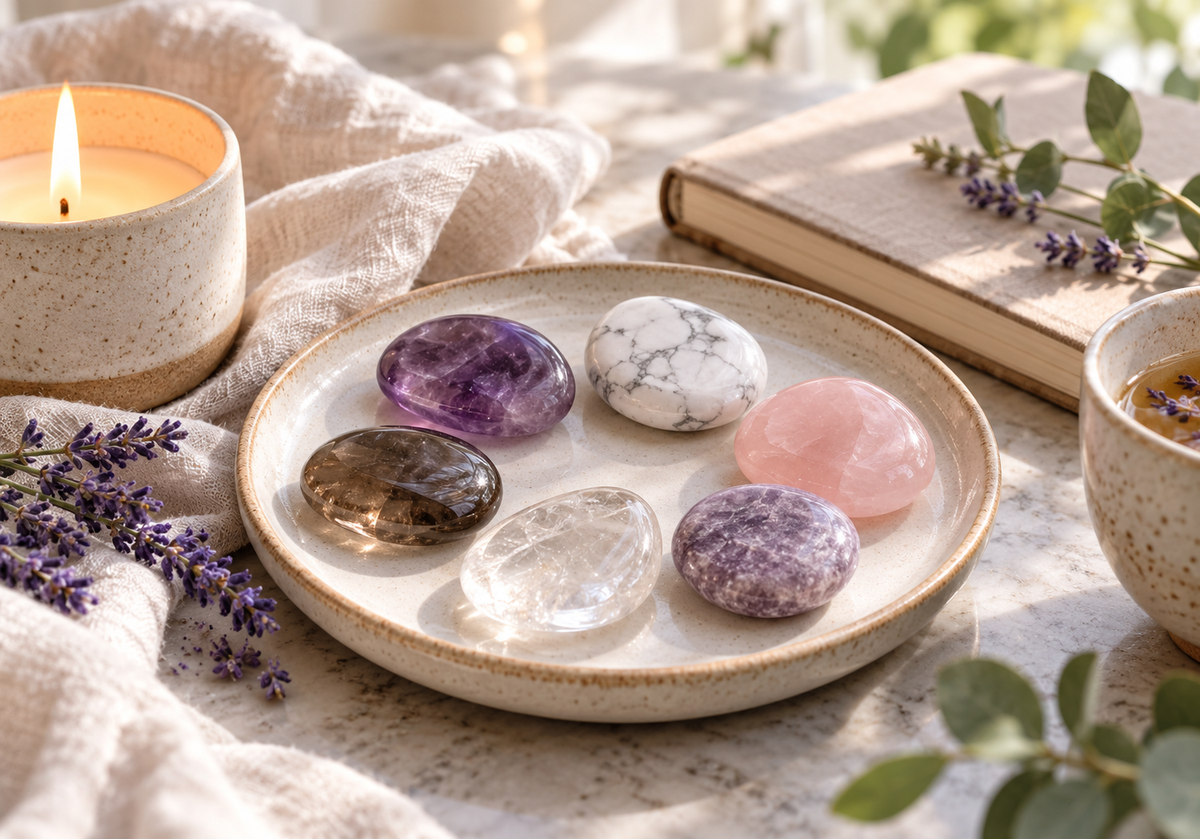
In crystal traditions, certain gemstones are especially associated with calm, grounding, compassion, and spiritual awareness. Amethyst, Rose Quartz, Howlite, and Black Tourmaline each carry their own traditional meanings, offering different ways to approach a personal calming ritual.
Whether you prefer holding a smooth stone during meditation, keeping one beside your journal, or incorporating crystals into an evening routine, this guide explores their symbolism and simple ways to use them.
Choosing a Calming Stone by Tradition
Start with the kind of pause you want to create. A small, smooth calming stone is easy to carry and hold during slow breathing. A larger piece may feel right on a bedside table, desk, or meditation space.
|
Crystal |
Traditional Associations |
Often Chosen For |
|
Amethyst |
Calm, intuition, spiritual awareness |
Meditation, reflection, journaling |
|
Rose Quartz |
Love, compassion, emotional healing, self-love |
Self-love and Heart Chakra practices |
|
Black Tourmaline |
Protection, grounding, energetic protection |
Grounding rituals and workspaces |
|
Howlite |
Calm communication, emotional expression |
Reflection, journaling, mindful conversations |
Available stones change over time. Browse the Calming Stones collection for more details.
Amethyst: Calm, Spiritual Awareness, and Intuition
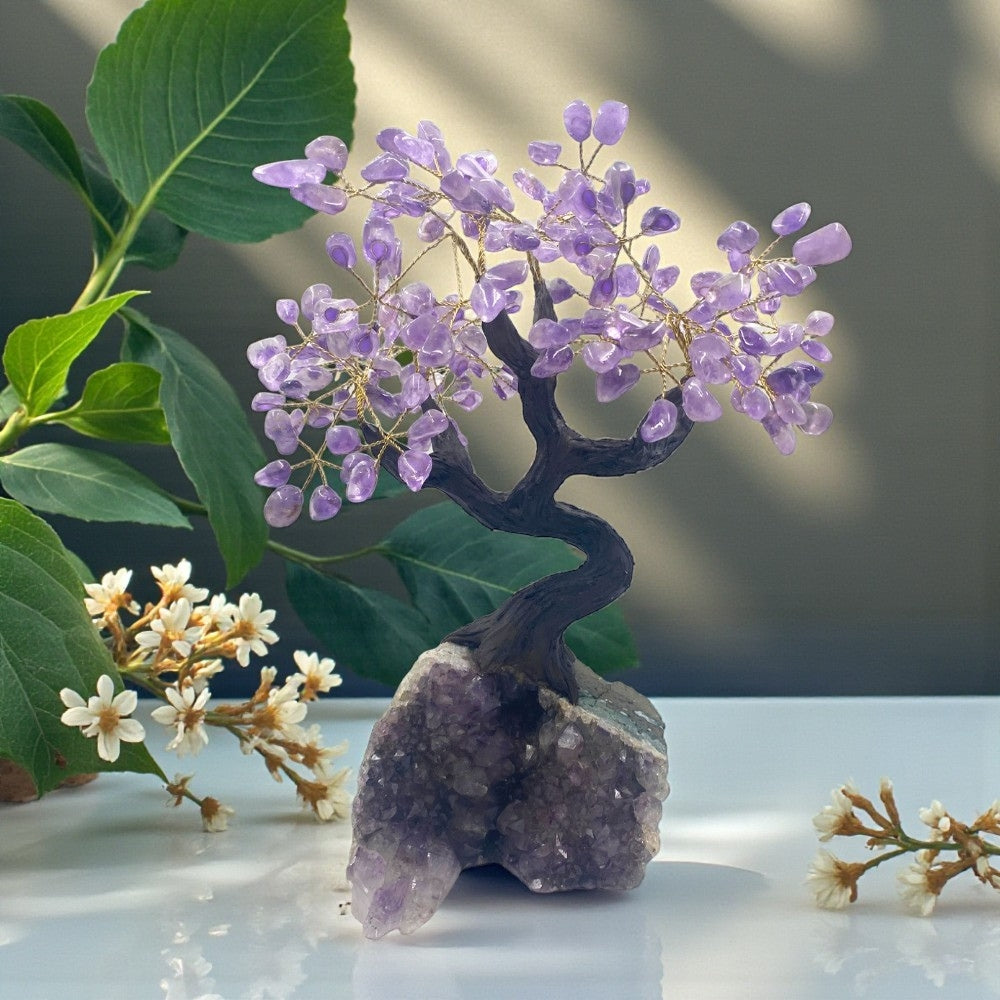
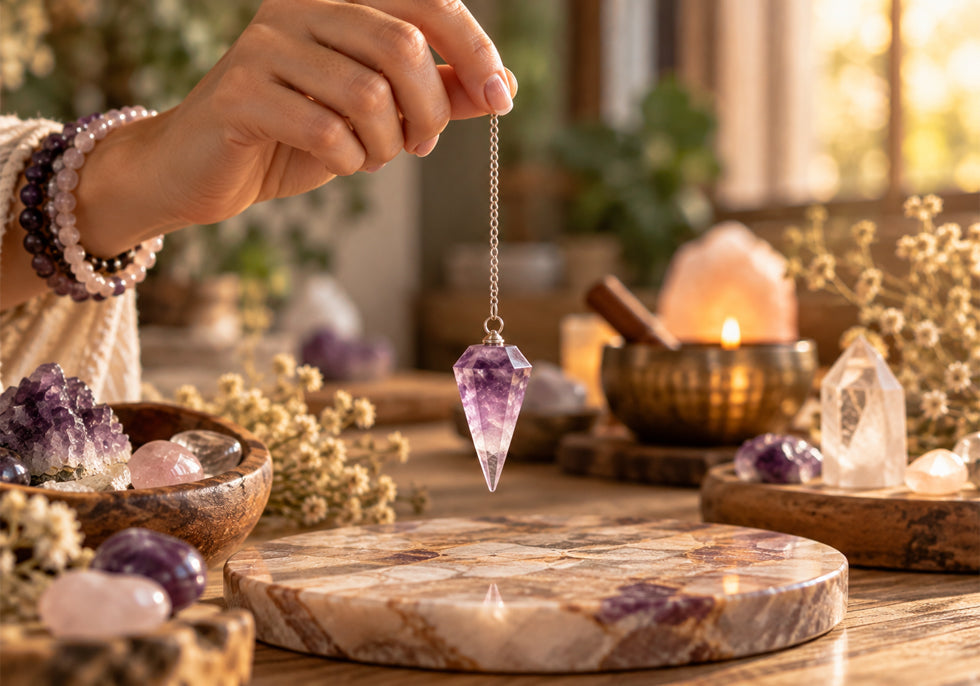
With its beautiful purple tones, Amethyst has long been treasured in crystal traditions for its associations with calm, spiritual awareness, and intuition.
Often connected with the Third Eye and Crown Chakras, Amethyst is a popular choice for meditation, quiet reflection, and spiritual practices.
Try This: Keep an Amethyst stone beside your journal or meditation space. Before beginning, hold it in your hand, take three slow breaths, and choose an intention such as patience, clarity, or presence.
Rose Quartz: Love, Compassion, and Self-Love
Known as the Stone of Love, Rose Quartz is traditionally associated with love, compassion, emotional healing, and self-love. Its gentle pink coloring and connection with the Heart Chakra make it a meaningful choice for heart-centered rituals and personal reflection.
Try This: Hold Rose Quartz while repeating a simple affirmation, such as "I can meet this moment with kindness." You might also write that affirmation at the top of a journal page as a reminder throughout the day.
Howlite: Calm Communication and Emotional Expression
Howlite is often recognized by its white coloring and delicate gray veining. In contemporary crystal traditions, it is associated with calm communication, emotional expression, and thoughtful reflection.
Try This: Before an important conversation or a journaling session, hold a Howlite stone and take a few slow breaths. Consider what you want to communicate and how you would like to express yourself.
Black Tourmaline: Protection and Grounding
Black Tourmaline is traditionally associated with protection, grounding, and energetic cleansing.
Often connected with the Root Chakra, it is a popular stone in practices centered on stability, security, and feeling connected to the present moment.
Try This: Keep Black Tourmaline near your workspace. When you need a moment to reset, place both feet on the floor, take a slow breath, and notice a few details in your surroundings.
A Simple Three-Breath Ritual with Your Crystal
You don't need a lengthy meditation session to create a meaningful moment of calm.
Try this simple practice whenever you'd like to pause and reconnect with the present.
- Choose your stone. Hold a crystal that feels comfortable in your hand.
- Take three slow breaths. Breathe in gently and allow each exhale to be unhurried and comfortable.
- Notice the stone. Pay attention to its weight, texture, temperature, and shape.
- Set an intention. Choose a word or feeling you'd like to return to, such as patience, compassion, or presence.
- Carry that intention forward. Place the stone somewhere visible as a reminder of your moment of reflection.
The crystal becomes a tangible part of the ritual, while the breathing and mindful attention create an opportunity to slow down.
A Quiet Evening Ritual
As the day comes to a close, a small ritual can help mark the transition from activity to rest.
Choose a crystal traditionally associated with the quality you'd like to reflect on, such as Amethyst for calm, Howlite for thoughtful reflection, or Rose Quartz for self-compassion.
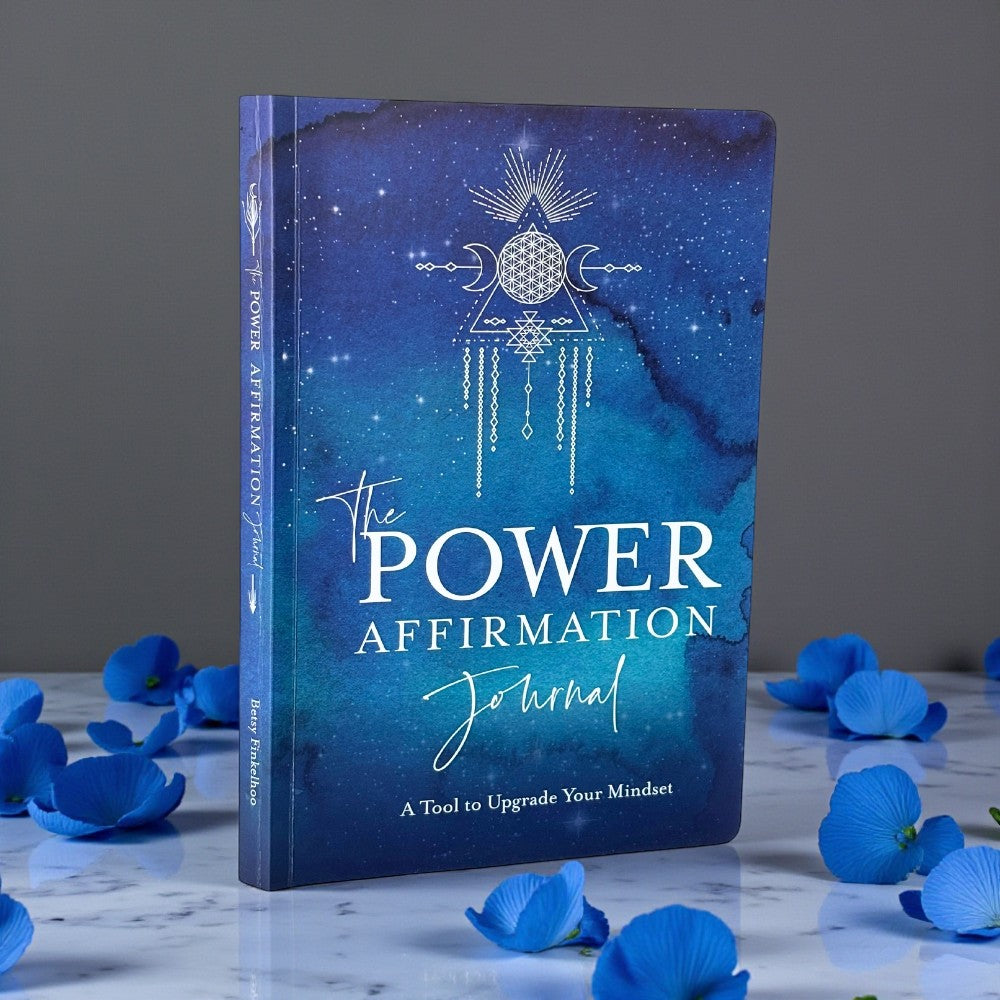
Place your stone beside a journal or on your nightstand. Take a few quiet breaths, then write down one thought you'd like to release for the evening or one thing you're grateful for.
When you're finished, return the stone to its place and allow the ritual to be complete.
Safety Note: Keep crystals on a stable surface rather than under pillows or bedding.
Choosing the Right Crystal for Your Ritual
Calming crystals come in different shapes and sizes, and each offers a slightly different experience.
- Calming Stones: Smooth, compact stones designed to be held during breathing exercises, meditation, and personal reflection.
- Tumbled Stones: Small, polished gemstones that are easy to carry in a pocket, keep on a desk, or arrange with other crystals. Explore our Tumbled Crystals.
- Palmstones: Larger, smoothly polished gemstones shaped to rest comfortably in the palm during meditation. Explore our Palmstones.
- Crystal Jewelry: Bracelets and other jewelry offer a way to keep a favorite gemstone close throughout the day. Explore our crystal bracelets.
How to Care for Your Calming Crystals
A little care will help preserve the natural beauty of your gemstones.
- Handle crystals gently and protect them from hard impacts.
- Remove dust with a soft cloth.
- Avoid harsh chemicals and abrasive cleaning products.
- Protect stones from prolonged exposure to intense sunlight or heat when appropriate.
- Check the care requirements of each mineral before cleaning it with water.
- Keep small crystals away from young children and pets.
Some minerals are particularly sensitive to moisture, while others can tolerate brief contact with water. When unsure, gentle dry cleaning is a sensible starting point.
If energetic cleansing is part of your spiritual practice, consider methods such as sound or other approaches appropriate for the particular stone.
Safety Note: Do not ingest crystals or place unknown minerals directly into drinking water.
Frequently Asked Questions
1. What crystals are traditionally associated with calm?
Amethyst is associated with calm, spiritual awareness, and intuition. Rose Quartz is connected with love and self-compassion, while Howlite is associated with calm communication and emotional expression.
Black Tourmaline is often chosen for grounding and protection-focused practices.
2. Can I use a crystal during meditation?
Yes. Many people incorporate crystals into meditation by holding a smooth stone, placing one nearby, or using its texture and weight as a point of focus while breathing.
3. Which crystals are traditionally used for grounding?
Black Tourmaline is commonly associated with grounding, protection, and the Root Chakra. It can be incorporated into meditation or a simple practice of noticing your feet on the floor and reconnecting with your surroundings.
4. What is the difference between calming stones, tumbled stones, and palmstones?
Calming stones are generally selected for their comfortable, tactile shape and use in mindfulness practices.
Tumbled stones are smaller polished gemstones that are easy to carry and collect.
Palmstones are typically larger and flatter, making them comfortable to hold during seated meditation.
5. How should I care for my calming stones?
Care requirements vary by mineral. Generally, handle stones gently, remove dust with a soft cloth, avoid harsh chemicals, and check the specific gemstone's care requirements before exposing it to water or prolonged sunlight.
6. Can crystals help with anxiety?
Crystals are traditionally incorporated into meditation, reflection, and calming rituals, but there is no reliable scientific evidence that crystals themselves treat anxiety.
Some people find that holding a stone provides a comforting tactile focus during breathing or mindfulness practices.
If anxiety is persistent or interferes with daily life, support from a qualified healthcare or mental-health professional is important.
Begin With One Stone
You don't need an elaborate collection or a complicated ritual to create a meaningful moment of reflection.
Choose a crystal whose beauty or traditional symbolism resonates with you. Hold it during a few quiet breaths, keep it beside your journal, or let it become a reminder to pause during a busy day.
Sometimes, a simple moment of intention is enough.
Explore our Calming Stones Collection and discover a stone that feels right for your personal practice.